


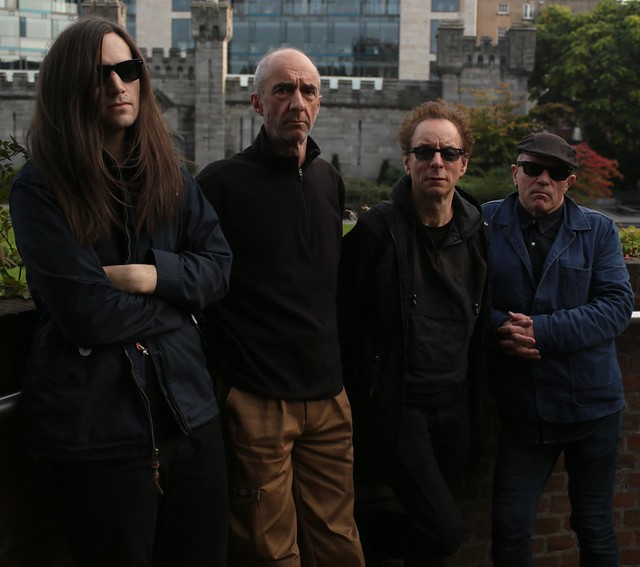
It was in Austin Kleon‘s book about creativity, Keep Going, that this writer stumbled across the story of Wire‘s No List. Kleon uses it as an example of how lists can fuel creative work. Wire, he notes, defined their artistic vision not by listing what they wanted to do, but by listing what they wouldn’t do.
- No solos.
- No “rocking out.”
- No ending songs on choruses.
It’s a deceptively simple idea which produced one of the most influential bodies of work in the history of British rock music.
Wire formed in London in October 1976, born out of the same chaotic energy fuelling the UK punk explosion. Vocalist and guitarist Colin Newman, bassist Graham Lewis, guitarist Bruce Gilbert, and drummer Robert Grey, better known by his wonderfully eccentric pseudonym Robert Gotobed, were part of the punk scene, appearing on the The Roxy London WC2 compilation, but they were never really of it. As even Newman himself said over the years: Wire were never a punk band, they just happened to be there at the same time. You either think they weren’t punk at all, or you think they were the best punk band ever, because they broke every single rule.
That No List was how they broke those rules. While their peers cranked out three-chord anthems built on pub rock tropes and guitar solos, Wire removed the clichéd elements entirely. Their debut, Pink Flag, arrived in late 1977. Twenty-one songs in thirty-six minutes, brutal, brilliant, and utterly unlike anything else. It now sits on Rolling Stone‘s 500 Greatest Albums of All Time list. Mike Watt of the Minutemen credited Wire with liberating his entire approach to songwriting. At Minor Threat‘s second gig, every band on the bill performed a Wire cover.
But Wire being Wire, they weren’t about to stand still. Chairs Missing in 1978 embraced synthesizers and studio experimentation, producing the shimmering ‘Outdoor Miner.’ Then 154 in 1979 pushed further into avant-garde territory. Three albums in three years, each a radical departure from the last, each essential. Then they promptly split up, because of course they did.
Reformations followed. In 1985, they reformed and refused to play any old material, instead hiring a Wire cover band called the Ex-Lion Tamers to open their 1987 US tour and play the classics while Wire performed only new songs. The band reunited again around 2000, and in 2010 guitarist Matthew Simms joined to form the lineup that produced their seventeenth studio album, Mind Hive, in 2020. Newman has run the independent Pinkflag label since 2000, keeping their catalogue in their own hands.
Wire‘s influence runs through the DNA of R.E.M., Blur, Joy Division, The Cure, Elastica, Helmet, and countless others. As Newman has put it, they’re “the most famous band you’ve never heard of.” Too weird, too arty, and too uncompromising for mainstream success, and too vital, too inventive, and too brilliant to ignore. Start with Pink Flag and follow wherever the thread takes you. Just don’t expect them to make it easy. After all, it was never about what they would do. It was always about what they wouldn’t.
