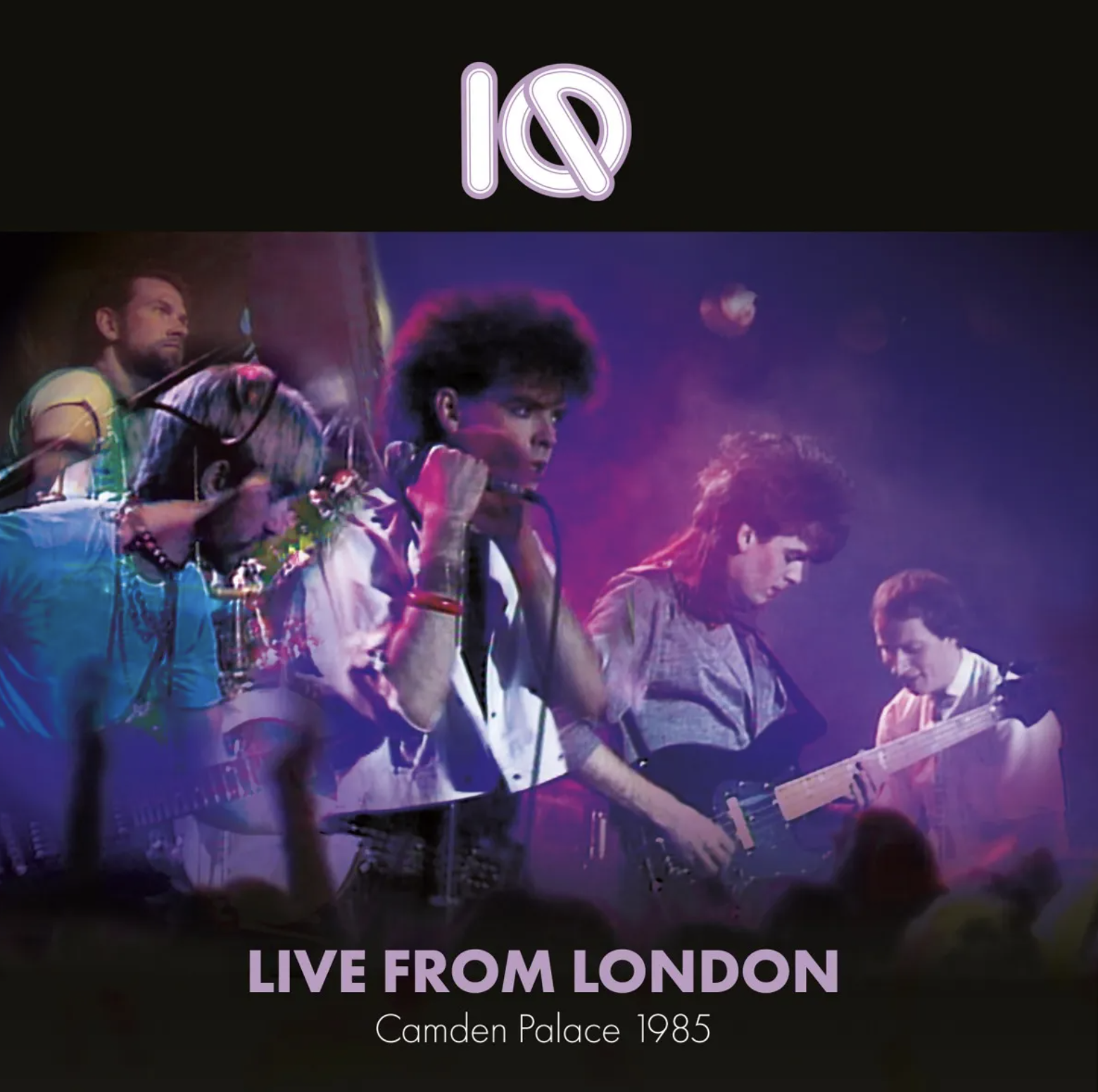
Recorded live, with only three days’ notice, at the Camden Palace as part of a series called Live From London, IQ at the time were an integral part of what was referred to as the neo-prog revival in the early 1980s, along with bands like Marillion, Solstice and Pendragon. Centred mainly around London’s legendary Marquee club, while Marillion went on to achieve chart success and become a major prog band, IQ became part of the “they also served” category and didn’t make the breakthrough.
This is a very well-crafted set, with one track from their debut album, Tales From the Lush Attic, plus several from follow-up album The Wake. Riven with complex passages throughout, the Genesis influence is hard to ignore, but it doesn’t detract from what was a superb set. The overall mood and feel is occasionally almost ethereal, with the playing of Michael Holmes (guitar) and Martin Orford (keys/Mellotron) especially noteworthy. This is particularly evident on tracks like ‘The Magic Roundabout’, ‘Outer Limits’ and the powerful ‘Widow’s Peak’, with Holmes occasionally coming across like Steve Hackett.
The energetic ‘Awake And Nervous’, from Tales From the Lush Attic, opens the set, and the soaring keyboard sound and the way the Mellotron is used provides the Genesis feel which pervades the performance. The remainder of the set consists of tracks from The Wake, with two non-album tracks: the superb ‘It All Stops Here’, from their very first release, a demo cassette entitled Seven Stories into Eight, and also the fast-moving ‘Just Changing Hands’, which was originally recorded for Tales From the Lush Attic but not included, though it later appeared as a bonus track.
Of the final two tracks, ‘The Thousand Days’ and ‘Corners’, both sound like they’re drawn from the new wave/synth-pop prevalent in the charts at the time, and both could be singles. While they weren’t using a drum machine, during ‘Corners’ drummer Paul Cook worked hard to convince us he was, holding onto the same reggae-like beat, which was somewhat out of kilter with the rest of the set. It’s not quite clear why the band chose to end what was a really good set with this disappointing track.
Forty years on from Camden, IQ are still together, still playing gigs, releasing consistently good albums every few years. Their current line-up, despite a few personnel changes down the years, consists of four of the five musicians who played on this recording, with Neil Durant replacing Martin Orford in 2011. And nothing much else has changed; IQ are still renowned for performing lengthy pieces, and especially for the quality of their musicianship, with every band member an outstanding muso. Their music still resonates with swathes of epic keyboards and Mellotron, plus searing guitar runs, all of which exists alongside the occasional quiet pastoral interlude.
They’re unlikely ever to achieve what they deserve, though they still have plenty to offer. This release will give younger fans an idea of what IQ sounded like when they were part of the prog revival of the early to mid-eighties. This probably isn’t an essential release, as there are better IQ live albums available, but it’s nonetheless a fascinating historical period piece.