Richard Houghton | Spenwood Books | 1969 U.S. Tour
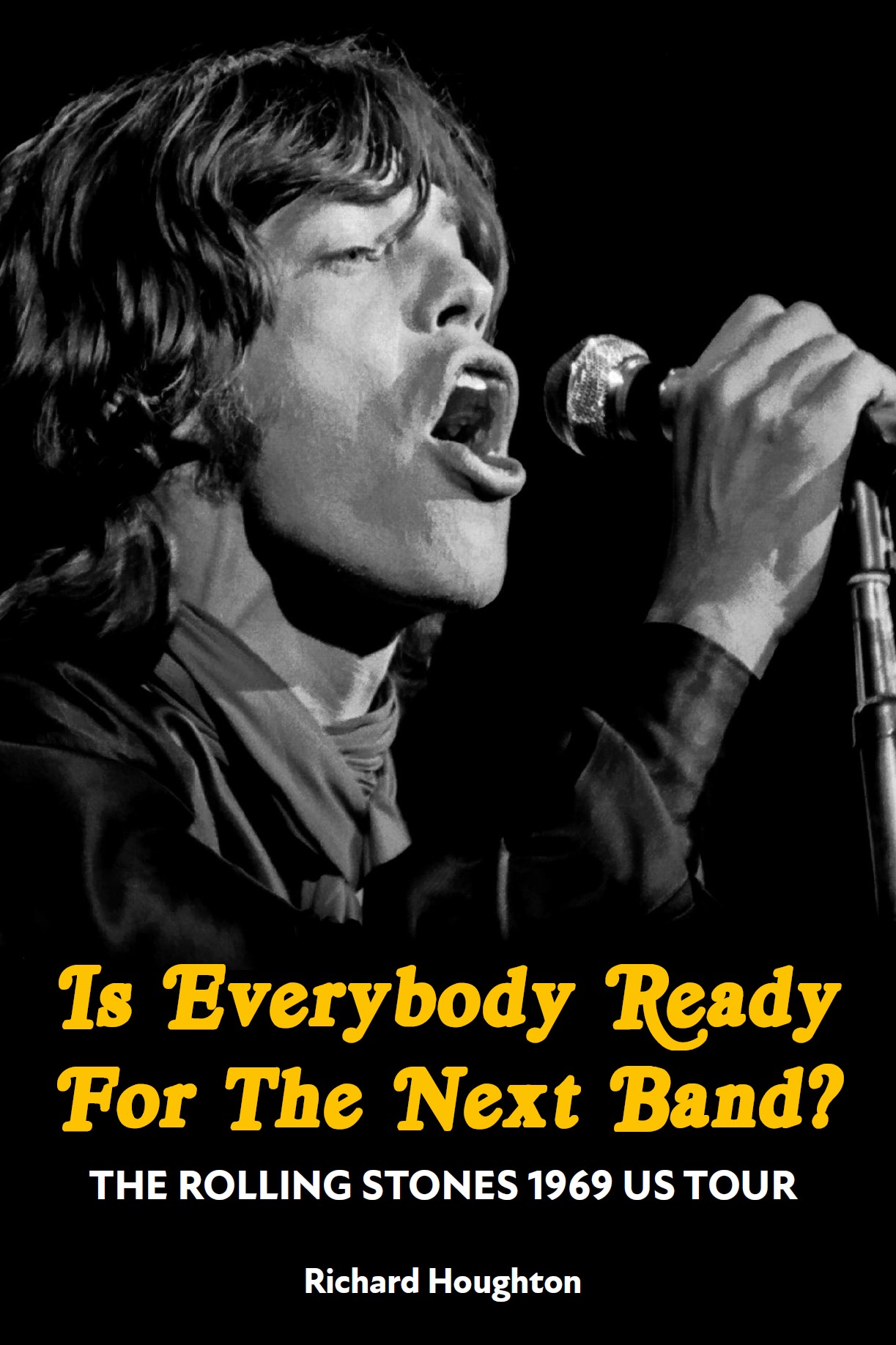
Up to 1969, The Rolling Stones had endured a couple of traumatic years which had seen three of the band arrested on drugs charges, with two imprisoned, though sentences were quashed on appeal. Brian Jones had left the band and drowned soon after, being replaced by a young unknown guitarist, Mick Taylor. In December 1967, they’d released Their Satanic Majesties Request to almost universal derision. The Stones and psychedelia just didn’t gel. Apart from a one off show in May 1968 and a free concert in Hyde Park in July 1969, they’d been largely absent from live work. They hadn’t toured the US for three years, or anywhere else, due to problems obtaining visas after three of the band received convictions for substance misuse. The cumulative events of 1967 to 1968 would have broken a lesser band than The Stones.
Thus, when the decision to tour the US in 1969 was made and dates booked, starting on November 8th 1969, The Stones now really had to play for keeps because the demographic had changed very considerably. Audiences were no longer just full of screaming girls, disinterested in the music. They’d had their expectations raised because pop had now become rock, and bands like Led Zeppelin, Cream, Jimi Hendrix and The Nice were in the ascendancy. With their virtuoso playing, every one of them had considerably raised the musical ante. Now, for a major band to just go onstage and give a run through of their hits was unthinkable. Audiences expected their favourite bands to be able to play.
A more aggressive style of journalism had also emerged, embodied in new counterculture publications like Rolling Stone and Creem. Sycophancy was out. Journalists were no longer starstruck; they were very willing to bite the hand that had given them free concert tickets if the band didn’t perform as expected.
The Stones, therefore, had everything to play for when they flew to the States in mid October 1969 to begin rehearsals. They’d only played one show with new guitar man Mick Taylor, who was largely an unknown quantity in the US, and he’d had all their classic tracks to learn, plus the new material on their next album, Let It Bleed. But that the tour became the success it did, apart from its concluding date, is largely due to the ease with which Taylor‘s style blended in with Keith Richards‘.
Richard Houghton’s book is a fan’s eye view of the tour, told from the perspective of those who’d purchased the tickets, stood in line and then waited, and waited, sometimes for several hours for The Stones to take the stage. However, the tour initially gets off to a bad start before the first note is played, with complaints from all quarters, especially the music press, about the extortionate price of tickets. Writers like Ralph Gleason stated this says The Stones despise their own audience. Jagger replies with, “We’re sorry if people can’t afford to come,” which goes down badly, especially when promoters say it’s the band setting ticket prices, not them.
But the shows themselves? Once the band eventually gets up onstage, up to four hours late on occasion, they generate ecstatic reactions from fans who realise this isn’t the mid ’60s Stones. This is now The Stones who can play onstage with the best of them. Their new songs were better and Keith Richards‘ playing had been galvanised with the virtuosic input of Mick Taylor. From this tour will come their classic live album, Get Yer Ya-Ya’s Out!
Fans all across the States are euphoric about these gigs, especially with support acts which included Terry Reid, B.B. King and Ike & Tina Turner, and how well new tracks like ‘Midnight Rambler’ and ‘Stray Cat Blues’ go down onstage. The controversy about ticket prices is soon forgotten as The Stones become “the greatest rock ‘n’ roll band in the world.” Renowned critic Dave Marsh, writing in Creem, declares: “The Stones are the greatest goddamn band in the land.”
The tour ends badly, however. Wanting to do a free US show, similar to their Hyde Park gig, the band are refused Golden Gate Park and other public spaces before a disused racetrack called Altamont was offered. Despite a stellar line up, the event is a disaster, with one murder, three other deaths, much violence and The Stones slated for believing Hells Angels were an appropriate choice for security. Did Altamont really herald the end of the ’60s?
But the real significance of this tour is what followed. On this tour, the band now played on bigger stages, with the gap between audience and performers wider than ever, with the sense of intimacy reduced. Also, the first 20 rows of seats were now reserved for friends and music biz people, with real fans being kept well back. This is a trend much in evidence today with Ticketmaster and Hyde Park Summer well to the fore.
Perhaps most importantly, this tour creates the template for future stadium rock (which The Stones would redefine even further on 1989’s Steel Wheels tour) with increasingly larger shows and bigger crowds needing better organising, and set the benchmark for tour organisation. Professionalism became the watchword, with agreed start and finish times and setlists. The only stadium band to flout this was Grateful Dead, whose setlist changed nightly. This was also the tour where Keith Richards morphs into “Keef,” complete with the coolest hair known to man, and ultimately becomes a role model for people like Johnny Thunders and Mick Jones.
Rolling Stone‘s Robert Christgau claims The Stones‘ 1969 tour is “history’s most mythic rock ‘n’ roll tour.” Certainly, apart from Crosby, Stills, Nash & Young‘s 1974 “Doom Tour,” few other tours can claim the same impact or significance.