Led Zeppelin remains one of the most influential and successful rock bands in history, having sold hundreds of millions of records worldwide. Here are ten facts about the band that helped define heavy rock.
1. The Name Came From a Joke About Failure
The band’s iconic name originated from a quip by The Who’s Keith Moon and John Entwistle. When Jimmy Page was initially exploring the idea of forming a supergroup with Moon, Entwistle, and Jeff Beck, Moon joked that the project would go down “like a lead balloon,” a British expression meaning it would fail miserably.
Page loved the imagery but wanted something grander than a balloon. The word “zeppelin,” those massive, dramatic airships, seemed to capture the perfect combination of heavy and light. Manager Peter Grant suggested dropping the ‘a’ from ‘lead’ so international audiences wouldn’t mispronounce it as “leed.”
2. They Refused to Release Singles in the UK
Led Zeppelin pioneered the concept of album-oriented rock and famously refused to release singles in their home country. While Atlantic Records released some singles in the US against the band’s wishes, Zeppelin’s position was clear, their albums were meant to be experienced as complete artistic statements, not carved up for radio play.
Manager Peter Grant reportedly promised Atlantic a “limited edition Christmas single” that never materialised. “I think that was a cover-up,” Grant later admitted. “We never went in just to record a single. That was the golden rule: no singles.”
Robert Plant put it bluntly in 2005: “I always thought of the Stones as a pop group who made singles.” Led Zeppelin saw themselves as something entirely different.
3. ‘Stairway to Heaven’ Was Never Released as a Single
Despite being one of the most played songs in rock radio history and widely considered among the greatest rock songs ever recorded, ‘Stairway to Heaven’ was never commercially released as a single anywhere in the world.
Atlantic Records desperately wanted to release it, but manager Peter Grant refused their requests in both 1972 and 1973. Page explained to Rolling Stone in 1975: “We were careful to never release it as a single,” which effectively forced buyers to purchase the entire Led Zeppelin IV album.
The strategy worked spectacularly. By 2000, the song had been broadcast on radio over three million times, and it remains the biggest-selling single piece of sheet music in rock history, averaging 15,000 copies sold yearly.
4. John Bonham’s Kick Drum Technique Changed Drumming Forever
When ‘Good Times Bad Times’ opened Led Zeppelin’s debut album, drummers around the world were left stunned. John Bonham’s rapid-fire bass drum triplets were so fast and precise that many assumed he was using a double bass pedal. He wasn’t. It was all single-foot technique.
Bonham was heavily influenced by jazz drummers including Gene Krupa, Buddy Rich, and Max Roach, which gave his rock drumming an unusual swing and sophistication. His signature “Bonham triplets,” played left-right-kick in rapid succession, became one of the most imitated licks in rock drumming.
Interestingly, Bonham once told Vanilla Fudge drummer Carmine Appice that he’d been inspired by something he heard on a Fudge record, though Appice later explained that Bonham had misheard what he was actually playing. Whatever the source, Bonham made the technique entirely his own.
5. Their Debut Album Was Made in 36 Hours for Under £2,000
The first Led Zeppelin album was recorded and mixed in approximately 36 hours of studio time, spread across several weeks in September and October 1968 at Olympic Studios in London. The total cost? Just £1,782, roughly £37,000 in today’s money.
Remarkably, the band didn’t even have a record deal when they made it. Jimmy Page and manager Peter Grant funded the sessions themselves, believing so strongly in what they were creating that they were willing to take the financial risk.
Page later explained to Uncut magazine: “[It] was a live album, and it’s done intentionally in that way. It’s got overdubs on it, but the original tracks are live.” That raw, immediate energy would become a Zeppelin hallmark. The album went on to sell over eight million copies worldwide and gross more than 2,000 times what it cost to make.
6. They Secured Unprecedented Control Over Their Music
When Peter Grant negotiated Led Zeppelin’s deal with Atlantic Records in November 1968, he secured terms that were virtually unheard of for a new band. Remarkably, Atlantic signed them without ever seeing them play live, on the recommendation of Dusty Springfield, who was friends with John Paul Jones.
The original contract, signed by Jimmy Page and Atlantic founder Ahmet Ertegun on 11 November 1968, was a three-year deal. The band received $104,100 immediately, followed by $51,300 in 1969 and another $51,300 in 1970. While often reported as $200,000, the actual documents (revealed by Led Zeppelin News in 2024 from court filings) show these specific figures. It was still one of the most substantial deals Atlantic had ever offered a new act.
But the money was only part of it. The contract gave Zeppelin considerable artistic freedom, including control over album contents and design. They formed their own company, Superhype Tapes, to handle their affairs. Intriguingly, the contract also gave Page the right to replace the other band members while retaining the Led Zeppelin name.
The contract was extended by two years in December 1969, and when it finally expired in 1973, they founded their own label, Swan Song Records, maintaining distribution through Atlantic but keeping creative control firmly in their own hands.
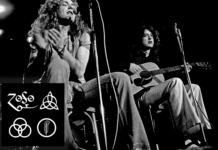
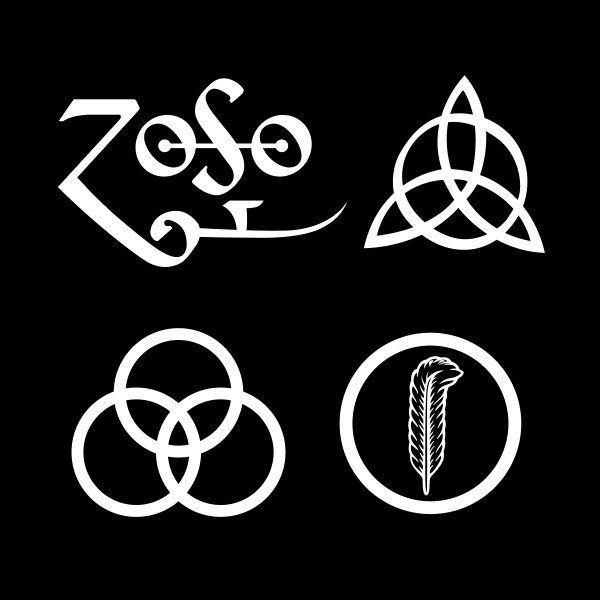
7. The Symbols on Led Zeppelin IV Were Chosen to Represent Each Member
Following lukewarm critical reception for Led Zeppelin III, Page made a bold decision: their fourth album would have no title, no band name, no track listing, and no text whatsoever on the cover. Instead, four mysterious symbols would represent the band members.
Atlantic Records were furious, but the band refused to hand over the master tapes until their demands were met. Page later recalled being told by a press agent that after a year’s absence from touring and recording, releasing an anonymous album would be “professional suicide.” His response: “We just happened to have a lot of faith in what we were doing.”
Robert Plant explained the selection process: “Each of us decided to go away and choose a metaphysical type of symbol which somehow represented each of us individually, be it a state of mind, an opinion, or something we felt strongly about.” Page’s “Zoso” symbol remains the most debated, with Page refusing to fully explain its meaning to this day.
8. They Formed From the Ashes of The Yardbirds
Led Zeppelin’s origins trace directly back to The Yardbirds, the legendary 1960s band that also launched the careers of Eric Clapton and Jeff Beck. When The Yardbirds fell apart in 1968, Jimmy Page was left as the sole remaining member with tour obligations to fulfil.
Page recruited singer Robert Plant on the recommendation of Terry Reid, who had turned down the role himself. Plant then pushed for his friend John Bonham as drummer, though it took considerable persuasion as Bonham was already in demand with other artists including Tim Rose. Session musician John Paul Jones called Page directly to offer his services.
The new lineup initially performed as “The New Yardbirds” to fulfil those existing tour dates in Scandinavia. Page later admitted he used the name as a “cloak of invisibility.” Even the first recording session tapes were marked “New Yardbirds” because he didn’t want anyone to know the real band name until the official unveiling.
9. The ‘Whole Lotta Love’ Riff Had Been Brewing for Years
That instantly recognisable opening riff of ‘Whole Lotta Love’ didn’t appear out of nowhere. Jimmy Page had been tinkering with variations of the riff for years before finally committing it to tape for Led Zeppelin II in 1969.
The song became Zeppelin’s highest-charting single, reaching number four on the Billboard Hot 100 in January 1970, despite the band’s reluctance to release it. Atlantic Records had released an edited version in the US that cut the track from 5:33 to 3:12, much to Page’s displeasure. When they pressed copies for UK release, Page refused to allow it. “I played it once, hated it and never listened to the short version again,” he told the Wall Street Journal.
10. Their 2007 Reunion Broke the World Record for Ticket Demand
When Led Zeppelin announced they would reunite for the Ahmet Ertegun Tribute Concert at London’s O2 Arena on 10 December 2007, the response was staggering. Over 20 million people submitted online ticket requests for approximately 18,000 available tickets, a Guinness World Record for the highest demand for a single music concert.
The website crashed almost immediately after the announcement, with ticket applications reportedly coming in at a rate of 80,000 per minute. Tickets that originally cost £125 were later appearing on eBay for up to £1,800. One BBC Radio 2 listener paid £83,000 for a pair in a charity auction.
With John Bonham’s son Jason on drums, the band performed their first full-length concert in nearly three decades. Jimmy Page reflected: “I knew it was going to sell out quickly, but the tidal wave of euphoria that preceded the gig, the anticipation, went beyond what I could possibly have imagined.” It remains the last time the three surviving original members have performed together.
Led Zeppelin did things differently. They refused to play by the industry’s rules, insisted on artistic control when no one else had it, and in doing so helped shape what we now understand rock music to be. Over fifty years since their debut, their influence remains as powerful as ever.