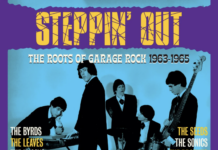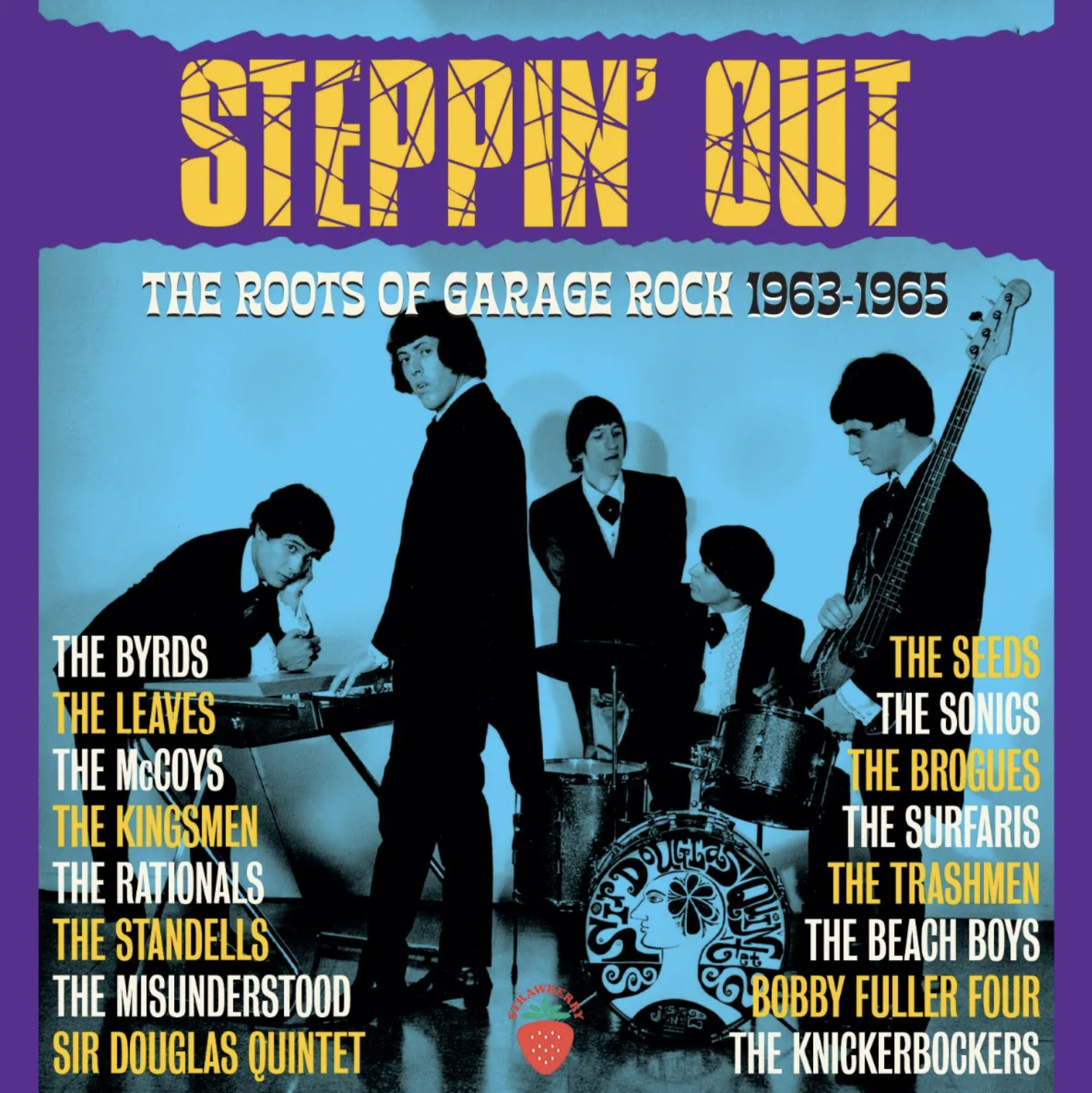
Steepin’ Out is a vastly entertaining 94-track, 3CD set covering the period between 1963 and 1965, the era before Garage Rock was considered a full-on genre in its own right. This collection highlights just how important the bands from the British Invasion had been on early 60s US music fans, who had previously been playing Surf Music, Folk or Top 20 hits, but who now bought electric guitars and formed bands to attempt replicating the exciting new sounds of The Rolling Stones, The Kinks, The Yardbirds, The Searchers, The Who and others. That transatlantic spark eventually produced many of the bands featured on this set, including The Sonics, Beau Brummels, Shadows of Knight, The Kingsmen and more.
In many ways, this is a prequel to Pushin’ Too Hard, also a 94-track 3CD set covering the period between 1964 and 1967. It serves as a precursor to Lenny Kaye‘s seminal 4CD box set Nuggets, which included many tracks now considered garage classics and which, but for Kaye’s diligent research, might well have been lost forever.
Garage bands, so called because this was where they rehearsed, proliferated in the early to mid 60s, making music which mostly revolved around three basic chords, guitars using fuzzed-up distortion, the occasional Farfisa organ and vocals which were usually shouted rather than sung. If you’re unclear about what a classic garage track sounded like, the second track on disc one, ‘Hot Pastrami’ by The Dartells, immediately gives you a textbook example, containing all the above ingredients.
One problem many bands faced at this time was the absence of national radio, meaning a band could have a massive hit in their home state yet be unknown the next state over. However, some of the artists featured here went on to achieve national hits: The McCoys with ‘Hang On Sloopy’, Tommy James & The Shondells with ‘Hanky Panky’, The Standells with ‘Dirty Water’ and Shadows of Knight with ‘Gloria’. Some artists even went on to become garage band superstars with the quality of their songs, like The Seeds and The Sonics, versions of which are still playing today. Other bands issued songs which went on to become standards and are still in rotation, such as ‘California Sun’ by The Rivieras, ‘Surfin’ Bird’ by The Trashmen, ‘Outer Limits’ by The Marketts and, most famous of all, ‘Louie Louie’ by The Kingsmen, the basic simplicity of which has rarely been bettered. How many rock bands can truly say the first guitar chords they learnt weren’t these?
Several artists on this collection had already made their name: Dion, Everly Brothers and The Beach Boys, while others would go on to become national names, like Beau Brummels, Paul Revere & The Raiders, Bobby Fuller Four and The Lovin’ Spoonful. There are a few acts who later achieved fame under a different type of music, including The Spades, who became The 13th Floor Elevators, and The Misunderstood, both becoming exponents of psychedelia later in the 1960s. And who would have guessed The Byrds, who are almost unrecognisable here, and Johnny Winter would go on to become superstars based on what’s included here?
One of the pleasures of sets like these is the discovery of great tracks from bands who barely made a ripple beyond their home district. ‘My Baby’s Barefoot’ by The Syndicate, ‘Grim Reaper’ by Twelfth Night and ‘Farmer John’ by The Premiers are three such examples, and there are many more spread across the set. Meanwhile, the little known ‘Hey Joe’, performed here by The Leaves, would go on to be immortalised by one Mr Jimi Hendrix within two years.
But whether or not the acts concerned featured in this set made a national breakthrough, what’s clearly evident is the sheer level of energy and enthusiasm generated in the music. Basic it may be, but it’s played as though lives depended upon it. These young kids weren’t to know it yet, but they were in on the ground floor of what was to become a social, musical and, ultimately, political revolution as the sixties unfolded. The sounds being made here were to influence many musicians who went on to make names for themselves. The influence the music included in this set had was to become extremely significant as the sixties progressed.