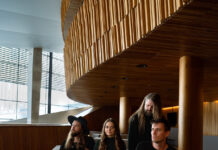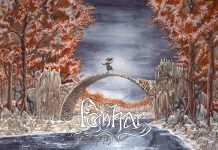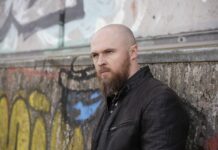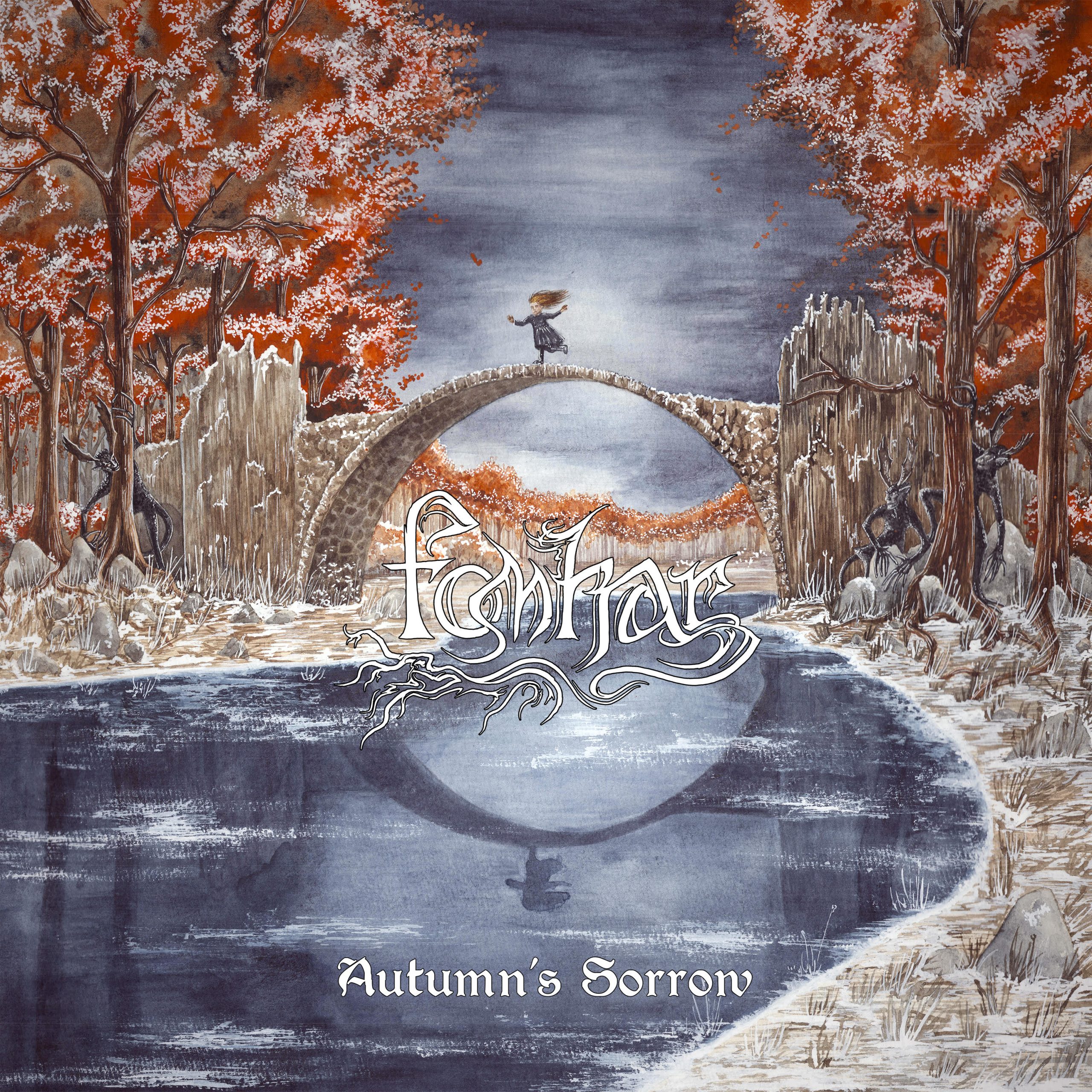
Born in a hospital ward and named after his daughter, Fomhar is the solo atmospheric black metal project of Glasgow musician Martin Rennie. He’s played live with Saor and Fuath, and his debut album Autumn’s Sorrow arrives digitally on 4th December. It’s a record of long, sweeping songs shaped by the Scottish hills and forests, with progressive twists, folk passages and some heavy riffs. We caught up with Martin to find out more.
Who are you and where are you from?
My name is Martin Rennie, from Glasgow, Scotland.
How did Fomhar begin, and what does the name mean?
Writing began in 2023 after a period of helplessness when my daughter was in hospital for a month. I wrote 80% of the album in there to deal with the trauma, and it felt natural to continue and create something good out of a horrendous situation. Fomhar is the Irish Gaelic word for autumn or harvest. It’s pronounced “fo-r” or “fo-wer” depending on the dialect, however I’m personally fine with “Fom-Har” too. I decided to name the project after my daughter, Autumn. I was also inspired to do this through my time playing live for Saor and Fuath.
How would you describe your music to someone discovering you for the first time?
I find it hard to label the music as there are multiple genres and styles involved. Whilst I’d say it’s atmospheric black metal at its core, it has progressive elements, heavy guitar riffs, vocal harmonies and some folk passages. It’s everything I want to hear in music.
As a solo project, how do you approach writing and recording everything yourself?
I hear everything in my head, and when an idea hits me I immediately record it on my phone. For this album, I learned how to record and engineer; it was an educational project. Once I learned how to use the programs it was straightforward. The album came together very quickly after I’d mastered the software.
Nature and melancholy run through your music. How much does the Scottish landscape shape the songs?
Immensely. There’s a sense of meditation walking through the hills and forests of Scotland, and it provides much needed solace in a never ending, engaged modern society. You’re never more than an hour’s drive from solitude, and there’s comfort in that.
What’s the story behind Autumn’s Sorrow?
The title track is deeply personal. As I mentioned before, my young daughter was admitted to hospital for a month and it was a heavy period of helplessness and despair. Thankfully everything worked out fine. I heard the entire song in my head within those hospital walls. This all happened over Christmas when autumn was falling into winter, and in the lyrics I used the changing of the seasons as a metaphor for her struggles. I wanted a sombre song on the album and wanted to write something Opeth-esque; the ending sounds like the closing credits to a film.
The album has some long, expansive tracks, with the opener running close to 15 minutes. How do you approach writing songs on that scale?
When writing the songs I paid no attention to the time until I recorded them, and I was shocked, as they poured out organically and they don’t feel that long to me personally. The first song, ‘Whisper On The Wound’, was born out of the atmospheric middle section, which I loved, and I felt I needed to build a song around it. It ended up going way heavier than I’d planned. In an age where 30 second clips and short reels are the norm, I’d rather go for the opposite approach and give someone escapism for 15 minutes.
Are there any tracks you are especially proud of, or that mean the most to you?
‘The Periphery Of Belonging’. This was the last song written for the record, as I wanted something a bit more immediate and hard hitting. It grew arms and legs and became a 10 minute relentless drum and guitar assault. I got my friend Caroline Salmona (Saor, Cǎn Bardd) to record a gentle intro and outro to juxtapose the aggressive nature of the song.
Can you tell us a funny, emotional or dramatic story from your time making music?
At the beginning of this project, I’d recorded an entire song using software I was not particularly comfortable with, and in my novice state I accidentally deleted the entire track. The whole song needed to be rerecorded. I was devastated, but I can laugh about it now!
What’s next for Fomhar?
The album will be released on 4th December digitally, and if the interest is there I’ll find a way of making physical happen. I’m undecided on taking Fomhar to the stage as of yet; who knows what the future holds. I recorded enough material for three albums, which I fully intend to release.
Where can people find and follow you?
You can find Fomhar on Instagram, Bandcamp, Facebook and YouTube.