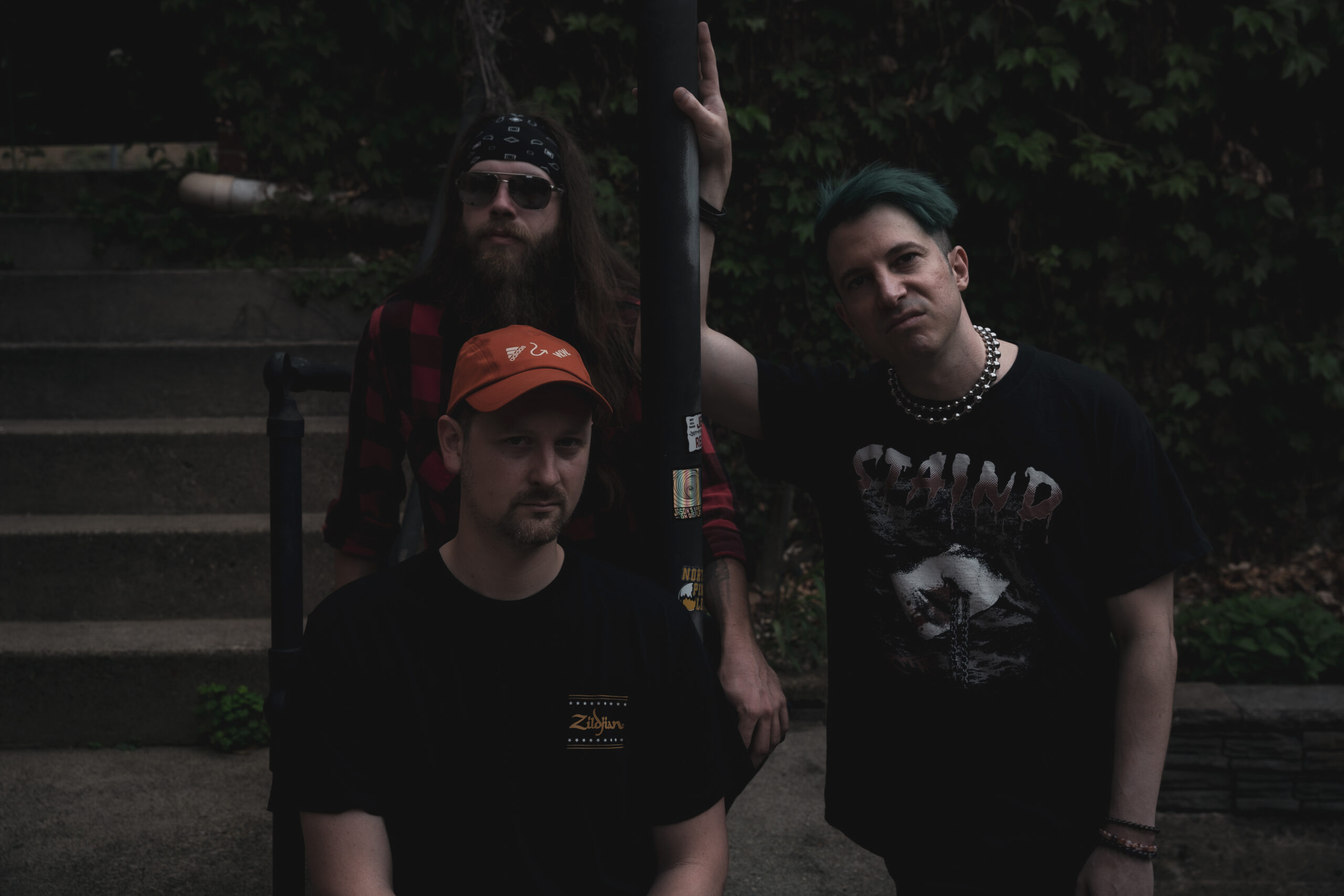
There’s a whole generation of heavy music that lived in the space between Ozzfest and Warped Tour, and GUIDES want to bring it back. The Pittsburgh band trade in the melody and muscle of late nineties and early two thousands rock, drawing a line straight through Taproot, Finch, Deftones and Thursday. After years of lineup changes, false starts and a pandemic that stalled them before they could get going, frontman Jonathan Joseph and the band have finally arrived where they want to be, with three singles landing across summer 2026 and an EP taking shape. We caught up with Jonathan to talk growth, throwback values and the night he played the show of his life two weeks after a serious car accident.
Who are you and where are you from?
I’m Jonathan Joseph, lead singer of GUIDES. We’re based in Pittsburgh, Pennsylvania.
How did GUIDES come together, and how did you settle on the name?
GUIDES originally formed in 2014 with a different lineup that had broken off from another local band we were all playing in together. The goal was essentially to prove we could do it our way. We did that for a while, but the lineup fell apart before we could finish recording our EP. I reformed the group with the original bass player in 2019, we found our drummer Tim, and then the pandemic stopped us before we could get off the ground. We kept at it and eventually transformed into what you see now.
The criteria for the name was one or two syllables, something easy to say and remember. At the time I was discovering my spirituality and studying metaphysics and astrology, and the word ‘guides’ kept appearing everywhere. It became the logical choice. It fit the criteria. The decision was reinforced when I realised the word also shows up in one of my favourite Taproot songs, ‘Comeback’, where he sings about praying and waiting for a sign from his guides to help him proceed.
How would you describe your sound to someone who hasn’t heard you yet?
We like to tell people we could have played Ozzfest or Warped Tour back in the day. We like to straddle that line. More specifically, we’re Taproot versus Finch.
There’s a real late nineties and early two thousands flavour to what you do, with echoes of Finch, Taproot, Deftones and Thursday. What is it about that era that pulls you in?
Call it nostalgia, but it’s the exact era and music I grew up with. I’ll never forget the day I came home with Taproot‘s album Gift. Or how much I needed the album Welcome as a teenager when it came out. In a lot of ways it’s paying homage. It’s the music I always wanted to make but didn’t know how to, or didn’t have the resources for. But it’s also important to us because that was a different era for live music, concerts and festivals. Bands weren’t using tracks the way they do now. A lot of it was what you see is what you get, and that’s very much who we are and what we’re going to try to preserve. We’re a throwback in that way.
Your video for ‘Drain’ is out now. What is the song about, and how did the video come together?
When it comes down to it, ‘Drain’ is about growth. One of the hardest realisations of adulthood is understanding that not everyone grows at the same pace, and sometimes people stop growing altogether. Over time that creates distance in relationships and forces you to confront a difficult truth: you can’t do the work for someone else. No matter how much you care about them, growth requires honesty, sacrifice and a willingness to change, and not everyone is ready for that when you need them to be.
We had access to some incredible locations for the shoot, but the standout was the basement of an abandoned bar that looked like something straight out of a dungeon, complete with a prison cell and corroded drains with water still running through them. We kept joking that we were literally standing at the end of the drain. It was really special because we got to work with our friend Zosia West from Reign of Z, who stars as the video’s dungeon demon. We wanted to visually represent the internal conflict at the heart of the song. Her character embodies the push and pull between growth and stagnation, forcing the protagonist to confront a simple but uncomfortable reality: evolve or stay trapped in your own prison.
Your latest single, ‘Failure/Defines’, is out now. What can people expect from it?
‘Failure/Defines’ reveals another side of the band’s evolution. If ‘Drain’ introduced the heaviest, most aggressive side of this new chapter, ‘Failure/Defines’ expands the picture. It’s still heavy, but it leans harder into melody, atmosphere and some of the post-hardcore influences that have always been part of our DNA. The three singles we’re releasing this summer each occupy a different place on the spectrum, and this one sits right in the middle. It’s a good representation of where GUIDES is creatively right now.
What does your songwriting process usually look like?
All the songs start with me demoing instrumentals. I’m primarily a keyboard player, so a lot of the demos are built out with MIDI instruments, which believe it or not is really helpful as songs get sequenced and keys or tempos need shifting. I’ll share drafts of the instrumentals with the group for a sanity check and a green light. Then I lay in scratch vocals with a draft of lyrics that’s usually pretty close to final. We bring the songs into the room and start jamming them, and that’s really where everyone adds their personal flavour and style. From there we start the feedback loop with our producer, Zac ‘ZROKK’ Diebels. As we found, the writing process continues all the way through tracking. There are always adjustments to make on the fly, whether it’s lyrics or guitar parts.
What can people expect from a GUIDES live set?
High energy. Authentic. Real. We’re a throwback. We don’t use many tracks at all. It’s pretty much what you see is what you get, and that’s on purpose. Our sound is built around the impact of big dynamic shifts. We feel that payoff is greater and more powerful with the tension, simplicity and energy of just the live instruments. It’s what we grew up with. It just feels more natural that way. The tradeoff is that we’re more exposed, and sometimes the result is more raw and imperfect. But that’s live music. You can stay home and listen to the record if that’s what you want to hear.
What has it been like coming up in the Pittsburgh scene?
The Pittsburgh scene has been immensely good to us. I don’t think anyone would deny it’s primarily dominated by pop punk. Everything else is represented, don’t get me wrong, but pop punk is essentially the mainstream of it. So it’s maybe a little harder for a band like us to win people over. That said, we were embraced early on outside of our niche, because it was important to us to build community beyond just what was happening in hard rock and metal. And really, that’s the point of the scene. The best part of this whole thing has been the people we’ve been able to meet and connect with. It’s been beautiful, to be real. The love and support we feel is tangible, and watching the crowds grow over time has been the best feeling in the world.
What is next for GUIDES across the rest of 2026?
After ‘Failure/Defines’ we have one more single coming in July. There will also be a music video for ‘Failure/Defines’ on the way. We’ll be playing regional shows in support of the new singles, including 11 July in Erie, Pennsylvania and 18 July in Pittsburgh, Pennsylvania, with more to be announced. We also plan to return to the studio at the end of the summer to complete work on what will build into an EP.
Can you tell us a funny, emotional or dramatic story from your time as a band?
Ha, I’ll save the drama for the VH1 Behind the Music special someday. There’s been plenty of it already. I was in a very serious car accident two weeks before we opened for Sevendust. I was lucky to walk away, and very fortunate to be able to perform. Somebody was watching over me and wanted me on that stage that night. There’s a reason I’m still here, and I don’t take that for granted anymore. I wasn’t right physically or mentally at that point. I was concussed. But opening for Sevendust in a sold-out theatre is still the highlight of our career, and nothing was going to stop me from putting on the performance of a lifetime. And we did.