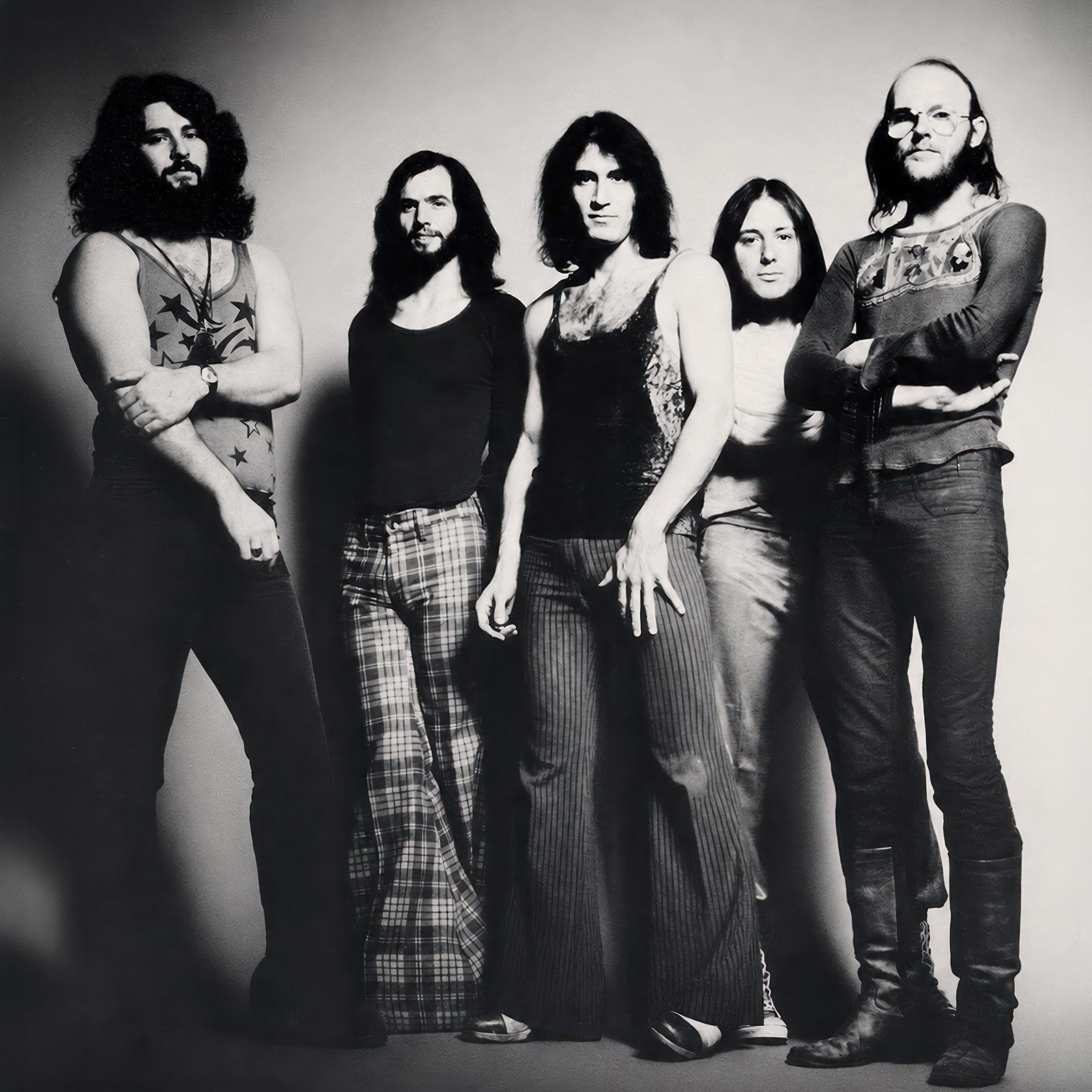
Gentle Giant‘s 1973 album, In A Glass House, became one of the band’s most feted works, pushing hard at the boundaries of progressive rock and, for an album recorded under trying conditions for the band, being recorded and mixed in a month, it remains one of the Giant’s most celebrated and defining albums, and regarded by many fans as a classic.
Now, rereleased in 2026, after having been remixed and remastered and in Dolby/Atmos, vocalist Derek Shulman talked to RAMzine about the album and some of the issues involved with its being recorded.
“We worked on the remastering of Glass House for a good six to nine months, and there was a lot involved in doing this, but it’s now gone from being one of my least favourite sounding albums to one of my favourite albums, certainly one of my favourite sounding albums, because we were reaching for something we didn’t think we’d be able to do.”
RAMzine (R): So it’s a case of ‘mission accomplished,’ then.
Derek Shulman (DS): “Well, I hope so, yeah. As I said, we put a lot into it. It was remixed and remastered by a superb engineer and producer, Eber Pinheiro, and it’s turned out really well, and not just because I was also involved in doing this.”
R: Many Gentle Giant fans rate Glass House as their favourite album.
DS: “It was certainly a milestone in the band’s career, that’s for sure. The thing was, it was all done in such a rush .. back in the day, we wrote, mixed and recorded it in a period of four weeks and, sonically it wasn’t what we wanted, but we then went on a US tour and the album came out as it did.
Columbia, who were our record company at the time, deemed it to be ‘too uncommercial’ to be released .. I mean, can you imagine Gentle Giant being uncommercial?” Cue much laughter, “but it came out on import and was one of the biggest imports, ever, and it went gold on import.”
R: So, one in the eye for Columbia, then.
DS: “We didn’t care,” more laughter, “we just did what we did.”
R: The album was recorded at a difficult time for the band, wasn’t it?
DS: “Yeah, it was. It was recorded at a very emotionally draining time because my elder brother Phil had just left the band, and so we went from being a six to a five piece band, which forced us to refocus on what we were and what we became. But in a way it was a kind of blessing in disguise he left because, in retrospect, it was the best thing for him and also the best thing for us. But, at the time, it was tough for everyone. Up to then, the band had been in limbo for a while .. is he staying in the band, is he going to leave? .. he was very torn about the band but, because his family was very important to him, he left.”
R: Did you ever think of replacing him with another musician?
DS: “No, absolutely not. Me and Ray, my younger brother, said ‘let’s just refocus on what the band can do,’ and so Kerry (Minnear, keyboards) bought a Mini-Moog and we replaced Phil with this. Sounds funny, but that’s what we did.”
R: Were there ever going to be any bonus tracks or alternate versions, or was this purely just a remastering exercise?
DS: “No, it was always going to be a case of just doing what we could not do back then because we didn’t have the multi-tracks. The album (Glass House) was done with the newest technology available and all we had was the two track masters, and that’s why it took so long splitting the stems into the individual instruments, so to do this took a huge amount of effort and a long time, but ultimately we were able to remix this album how we would have done it had we had the multi-tracks, though all we had was the two tracks, so it was quite an experiment but also a fantastic way of being able to do this, making the album sound the way we would have loved it to have originally sounded in 1973.”
R: Are there any other Giant albums in line for a Dolby/Atmos makeover?
DS: “I was with Steven Wilson last week, and he’s got three Gentle Giant albums done on Atmos on his app, Power and the Glory, Octopus and Free Hand, plus there’s also the ‘live’ album, Playing The Fool, remixed by Dan Bordemair. As a ‘live’ band, I’d say we were at our prime during the period of Fool as we’d hit the ground running after becoming a five piece before recording Glass House, and then Free Hand and Glory followed, and then we recorded Fool, which caught the band in the best light.”
R: Given Ray Shulman and Kerry Minnear were both classically trained musicians, do you think Gentle Giant ever got the respect it deserved for the quality of its musicianship?
DS: “Honestly, we didn’t think about being respected, or what other people thought, we just did what we wanted to do, in the way we wanted to do it. We weren’t part of any scene, or part of any crowd that hung out together .. we were from Portsmouth, we weren’t part of a London crowd, so we didn’t think about being respected .. we were lucky in that we had a great fanbase, especially in Europe and some parts of North America, and we were able to make a great living from being musicians and it’s great that, now, fifty years later, the music’s still retained its vitality and people are still talking about it .. it’s become more popular than it was back in the day. But, when we did it, we just did it for ourselves. We pushed ourselves as musicians to be better, but also to have fun and to enjoy each other’s playing, and then go on stage and have fun, as well as see the audience having fun watching the band play.”
R: Glass House was described as being a ‘very challenging listen.’ Fair comment?
DS: (Thinks for a few seconds) .. “It depends .. yeah, it used to be because, sonically, it was a milestone album, made very quickly and it was a very brittle sounding album, with a dark feel to it, but now it has a lot more warmth and more expansion. You can actually hear the instruments much clearer .. Ray’s bass is superb on the remaster but, originally, it was a very hard listen. So, if you like Gentle Giant music, you’ll like this, and if not, then you won’t.”
R: Gentle Giant called a halt forty six years back, but there’s still a lot of love out there for the band .. how pleasing is this for you as a musician?
DS: “I’m amazed and also very thankful there’s an audience out there who still want to hear and remember what Gentle Giant did, and I guess it speaks for the music which seems to be timeless, which I’m really happy about .. I’m thankful our music is still vital.”
R: Gentle Giant have never indicated any desire to reform, despite the continuing popularity of the music. Was this because the time was never right, or because band members weren’t interested or you felt you’d nothing more to say?
DS: “It’s the last thing you said. We felt we’d done all we wanted to do and it was an incredible chapter. As I look back now, it seems amazing, almost like someone else did it, but nevertheless, it was an amazingly creative musical time that we all had together, but when your time runs out, you move on, and that’s what we all did. To get together again after this would have been asinine .. we never did it for the money, we did it all for the music, let’s put it this way, and when the music stopped and we ended the chapter, we stopped, the chapter closed and when you try opening it again, you become your own tribute band, I’ve seen bands who’ve done it and this was something nobody wanted to do. So, we all went on to do different things .. Ray became a great producer, I became a music biz executive and we all went on to enjoy our lives in music.”