The Mongolian group The HU played the O2 Apollo in Manchester in October 2026, as part of the Warrior Chant Tour. SKÁLD, a French folk project based on Viking history and Norse mythology, supported them.
The hall was already packed when SKÁLD began, and the crowd did not resemble an ordinary metal audience. Many people seemed to care more about folk culture and mythology than about heavy guitars.
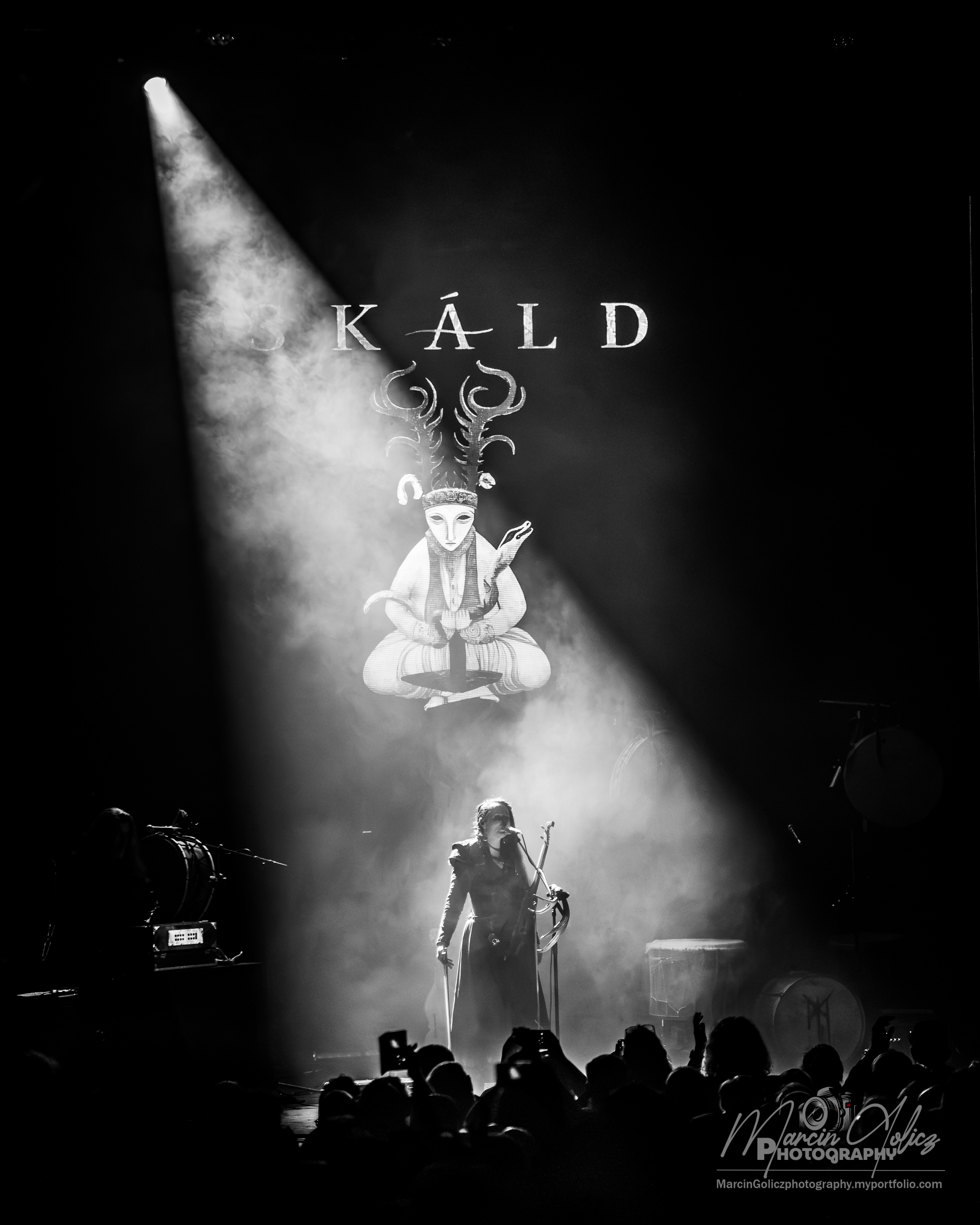
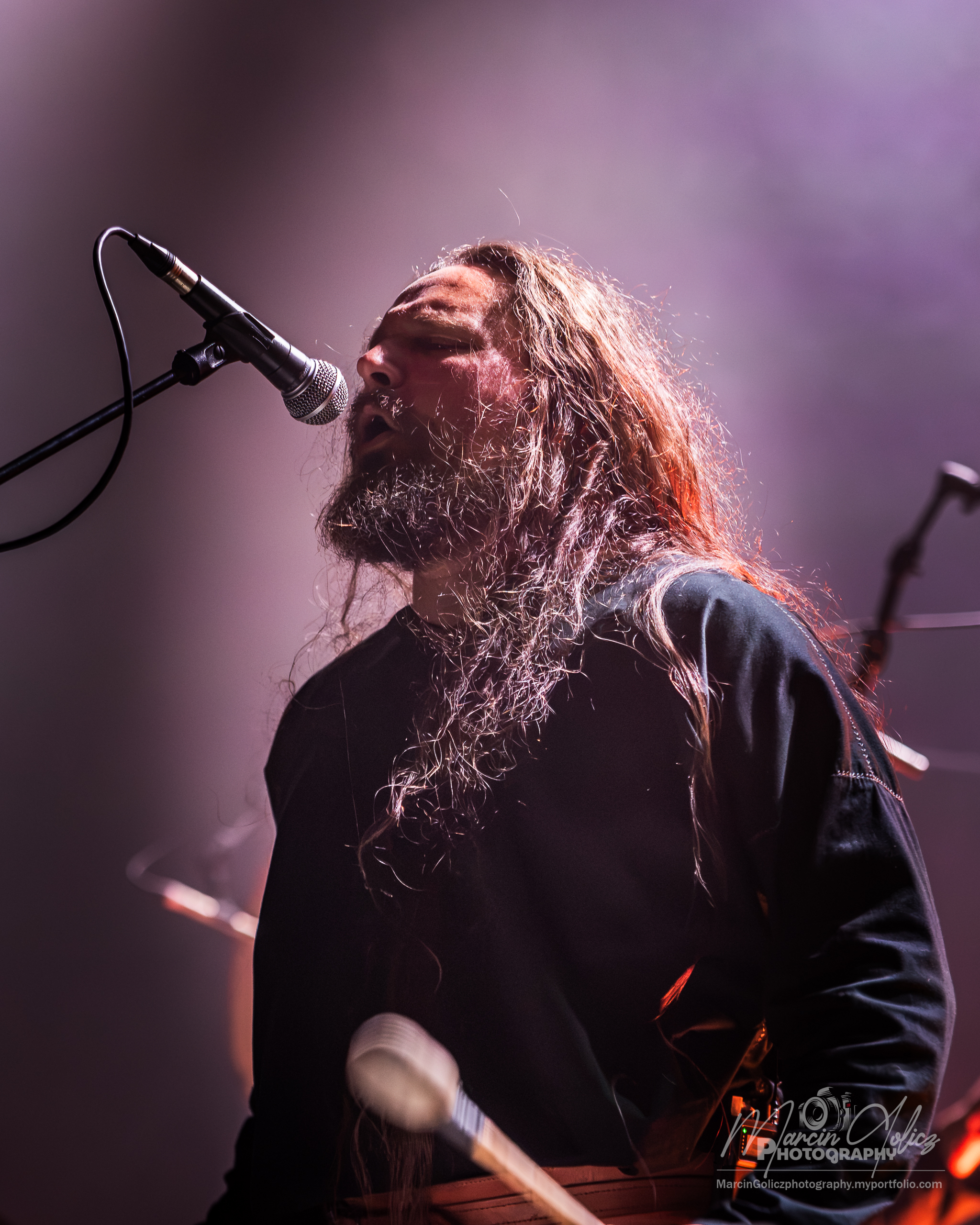
The composer Christophe Voisin-Boisvinet formed the project in 2018. Its sound is closer to ancient ritual music than to a standard rock concert, because the group concentrates on vocal harmonies and strong, repetitive rhythms.
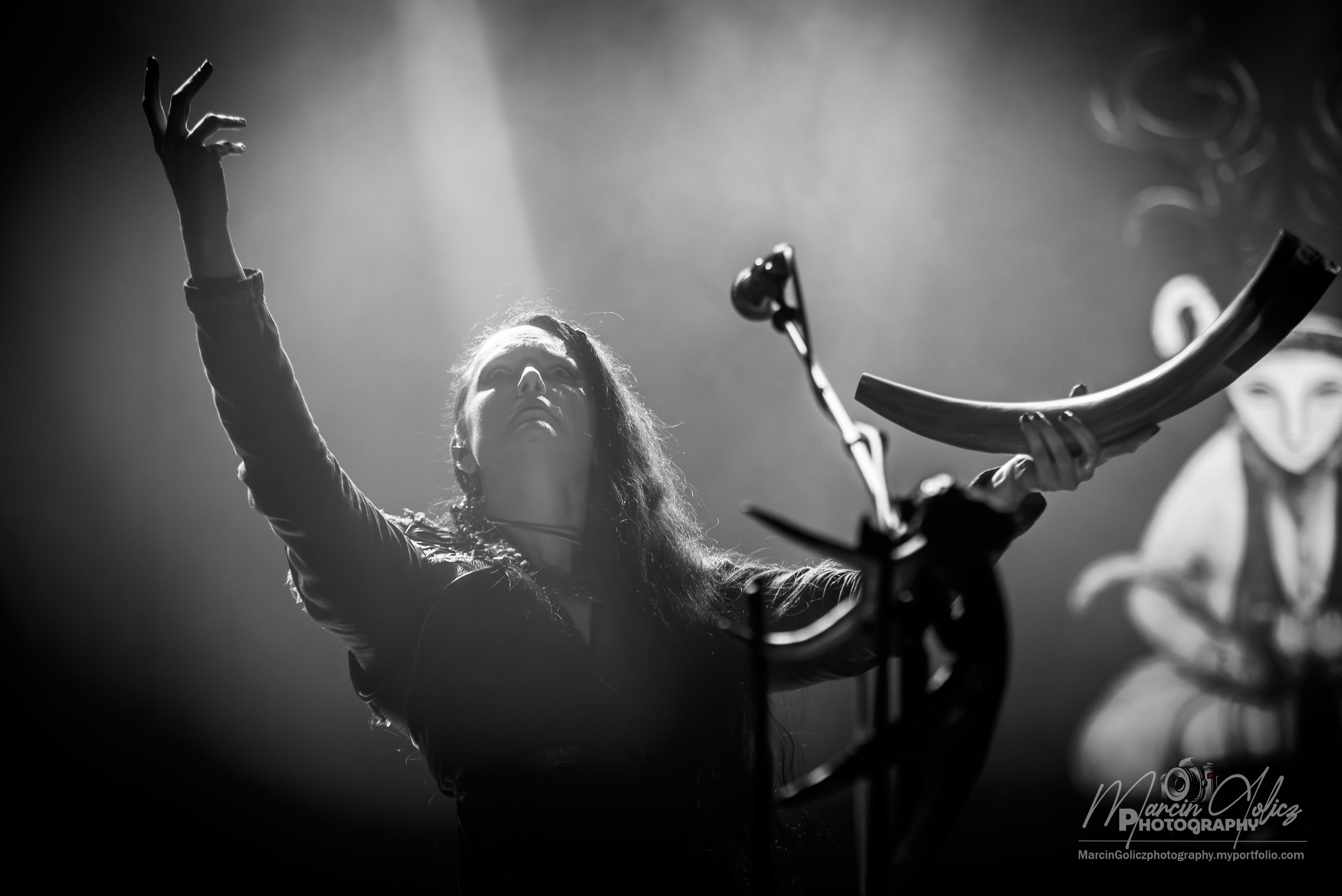
Marie Potosniak appeared in a long gown. She sang and played the fiddle, and she changed to a horn at times. Around her stood a large collection of percussion and string instruments. Steeve Petit was among the drummers, and Guillaume Levy played the bouzouki, a string instrument that resembles a large mandolin.
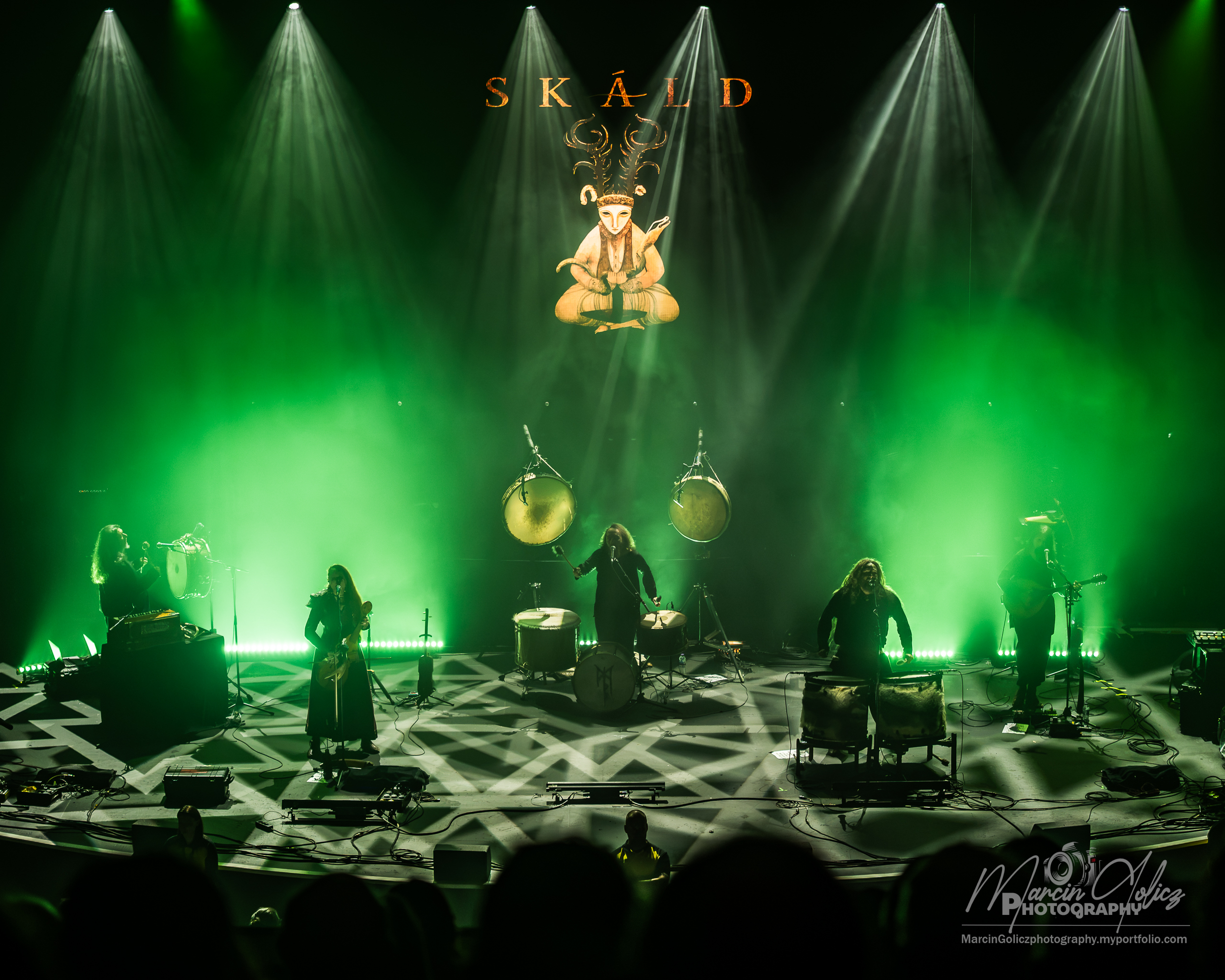
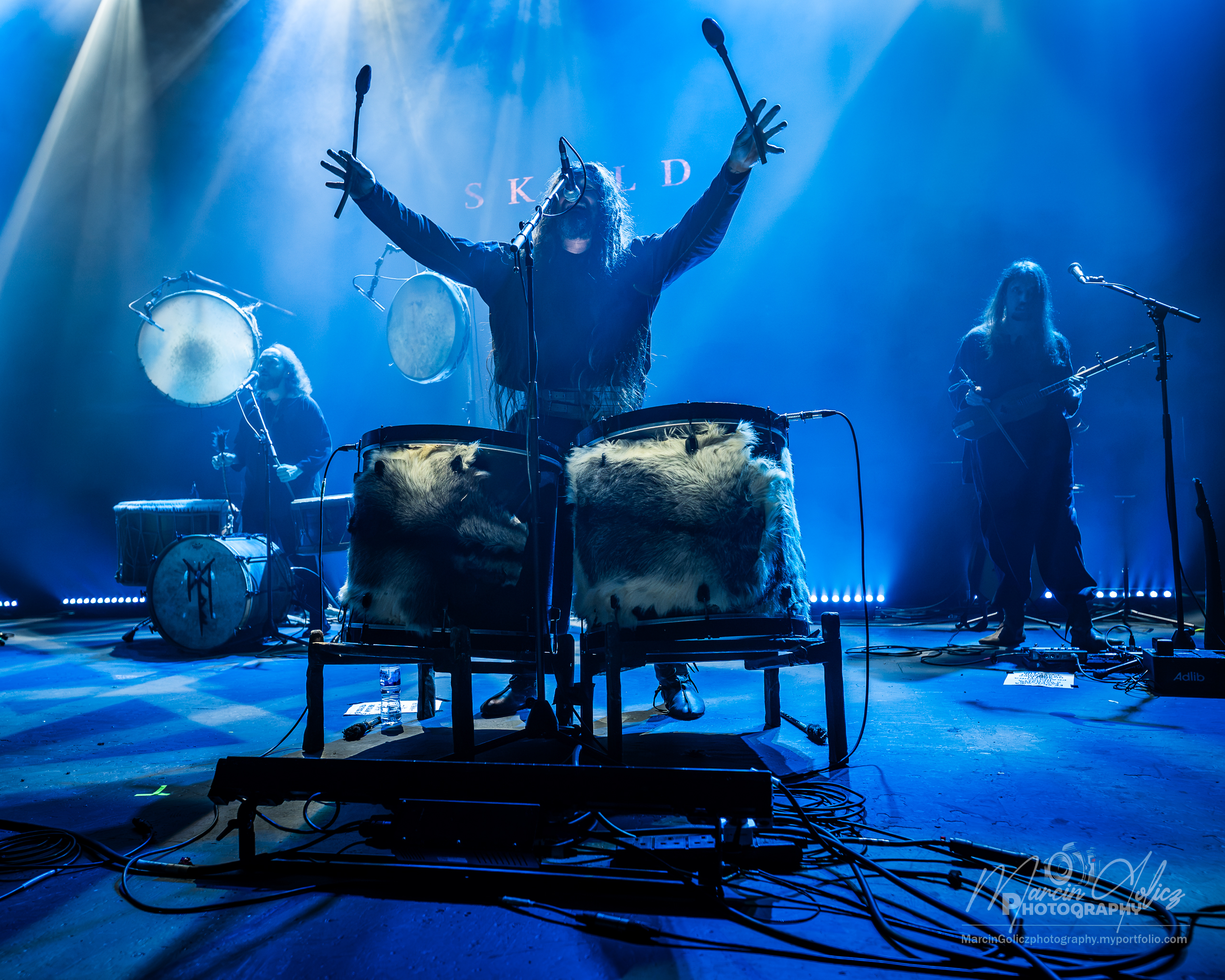
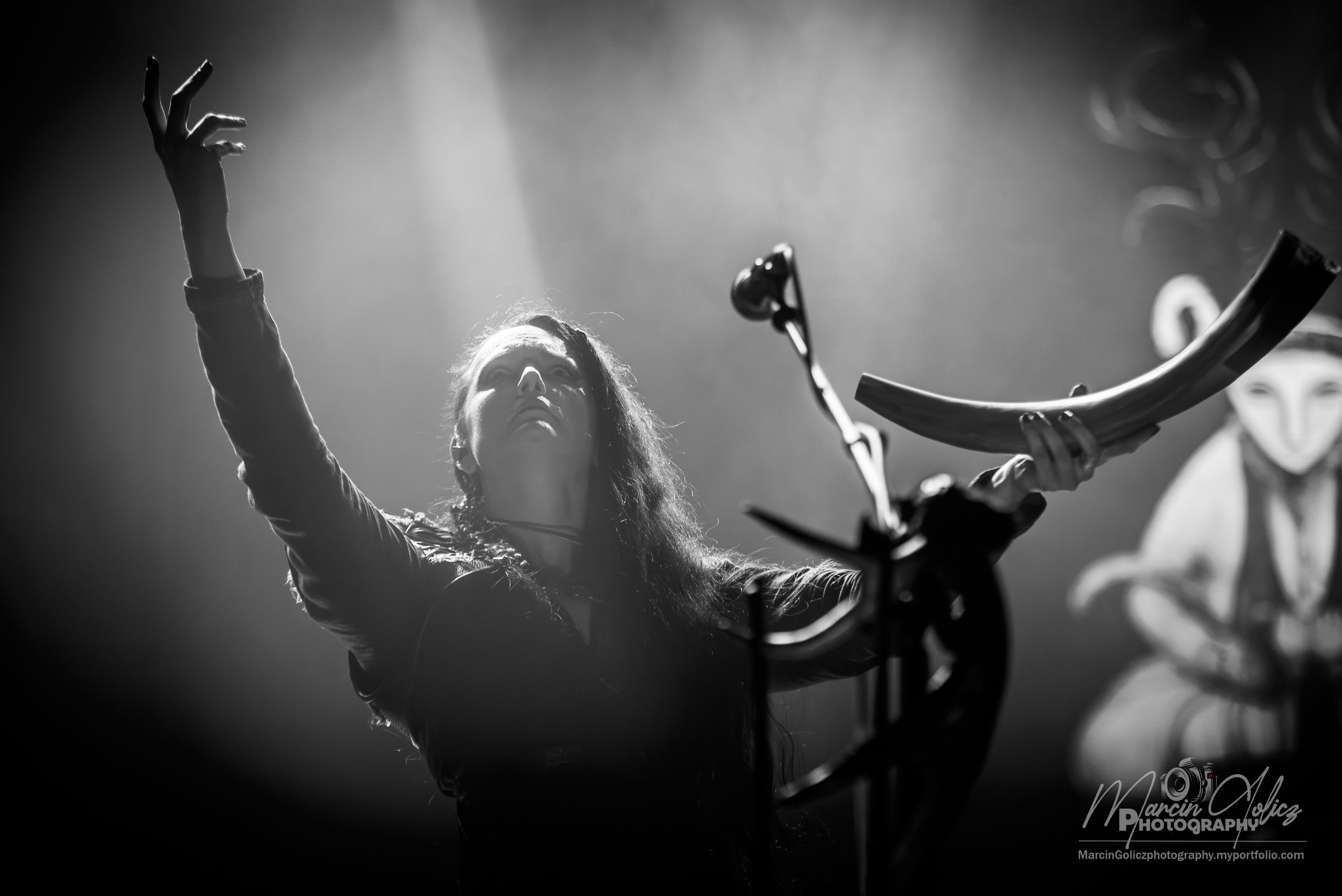
The first song was ‘Ek skal riða’. ‘Myrkviðr’ followed and kept the attention on deep percussion and haunting vocals. Both songs belong to Ørlǫg, the album that SKÁLD released through Napalm Records on 25 September 2026, only two weeks before the concert. ‘Ó Valhalla’ came third, and it contained more of the powerful group harmonies.
Deep drums repeated their patterns while layered voices moved above them, and the violin and the plucked strings came forward only occasionally. One passage resembled an old Celtic gathering. Another was darker and more ceremonial. The vocals, often sung by several members together, were the strongest element of the set.
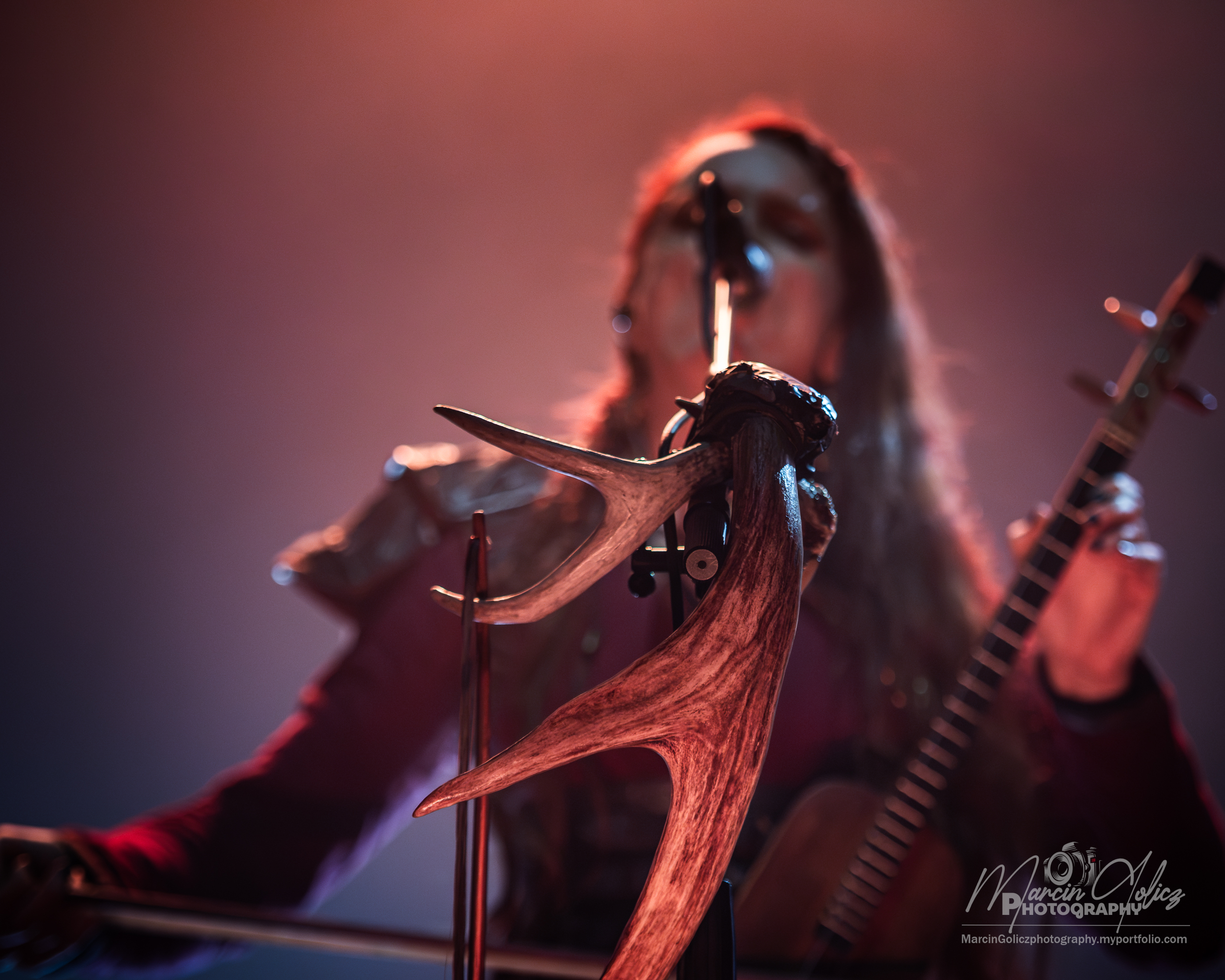
The lights followed the rhythm. Colour and intensity changed with each pattern, and the effect was mysterious without a complex stage production. After about 40 minutes SKÁLD left the stage. The audience had reacted warmly throughout, and the set was atmospheric and interesting.
The HU followed. The band formed in 2016 in Ulaanbaatar, Mongolia, and it describes its style as Hunnu Rock. This style joins traditional Mongolian music and throat singing to modern rock guitars and a standard rhythm section. The central traditional instrument is the morin khuur, a two-stringed horsehead fiddle. The name of the band is the Mongolian root word for “human being”, and the style name refers to the Hunnu, an ancient Mongolian empire that Western sources call the Huns.
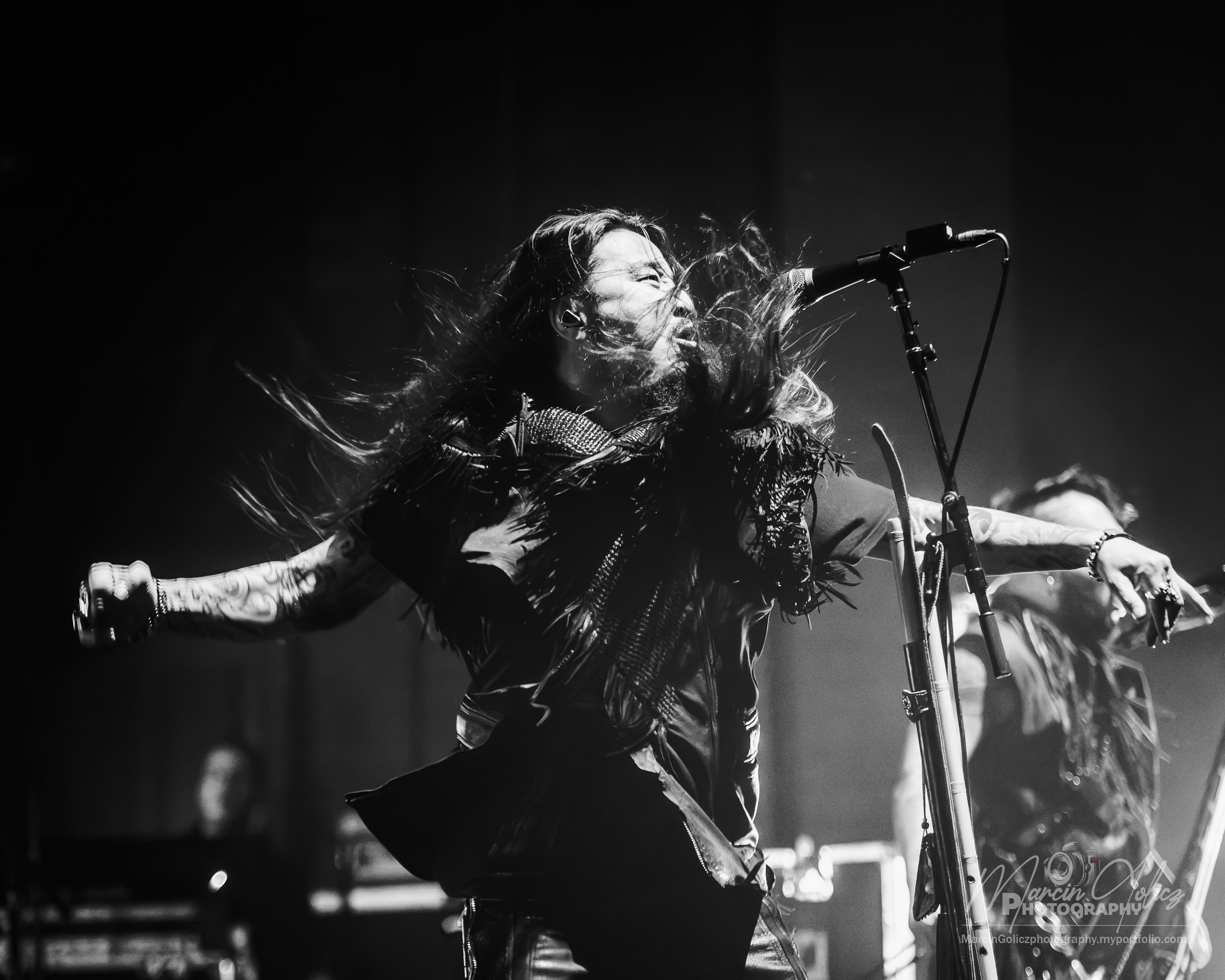
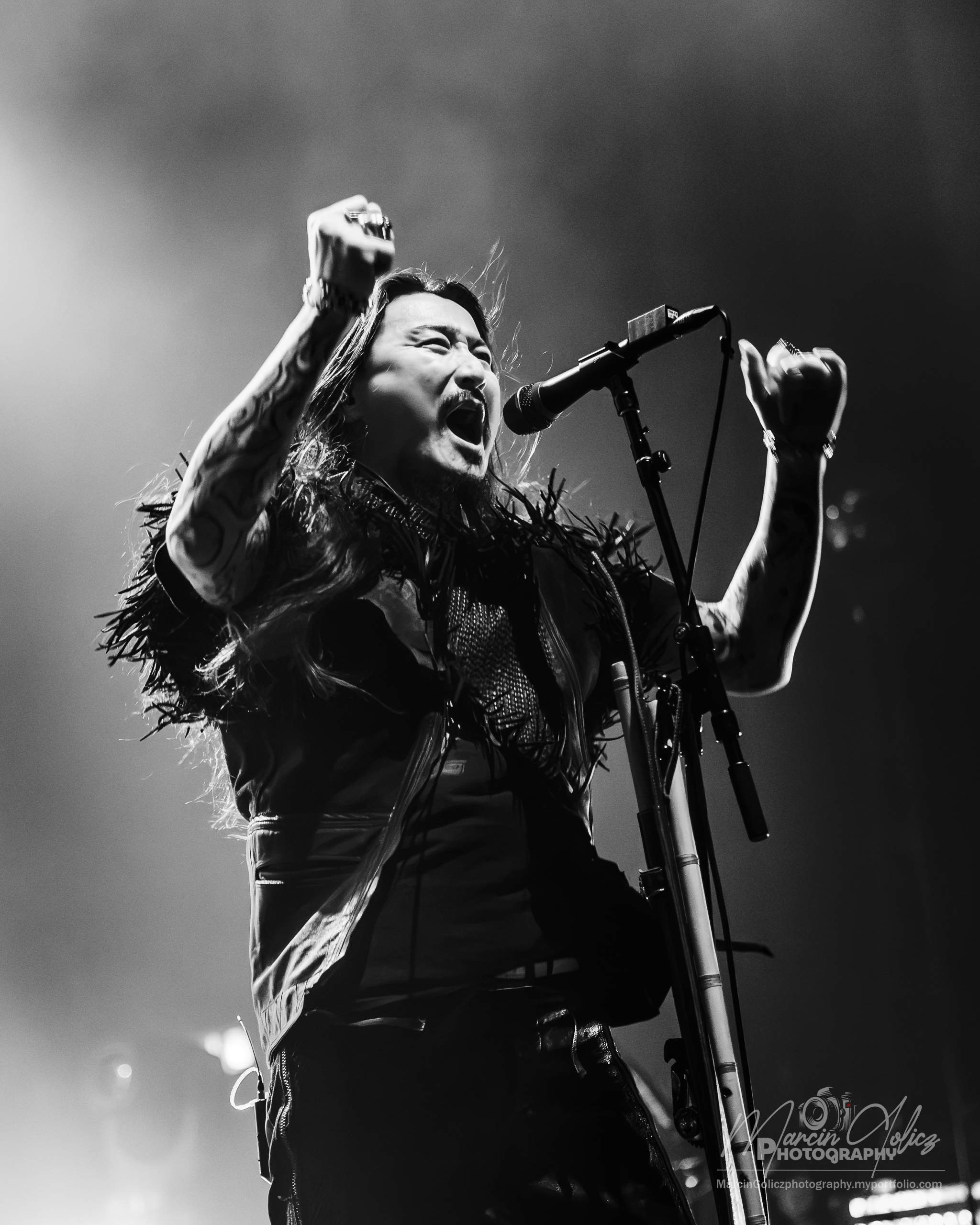
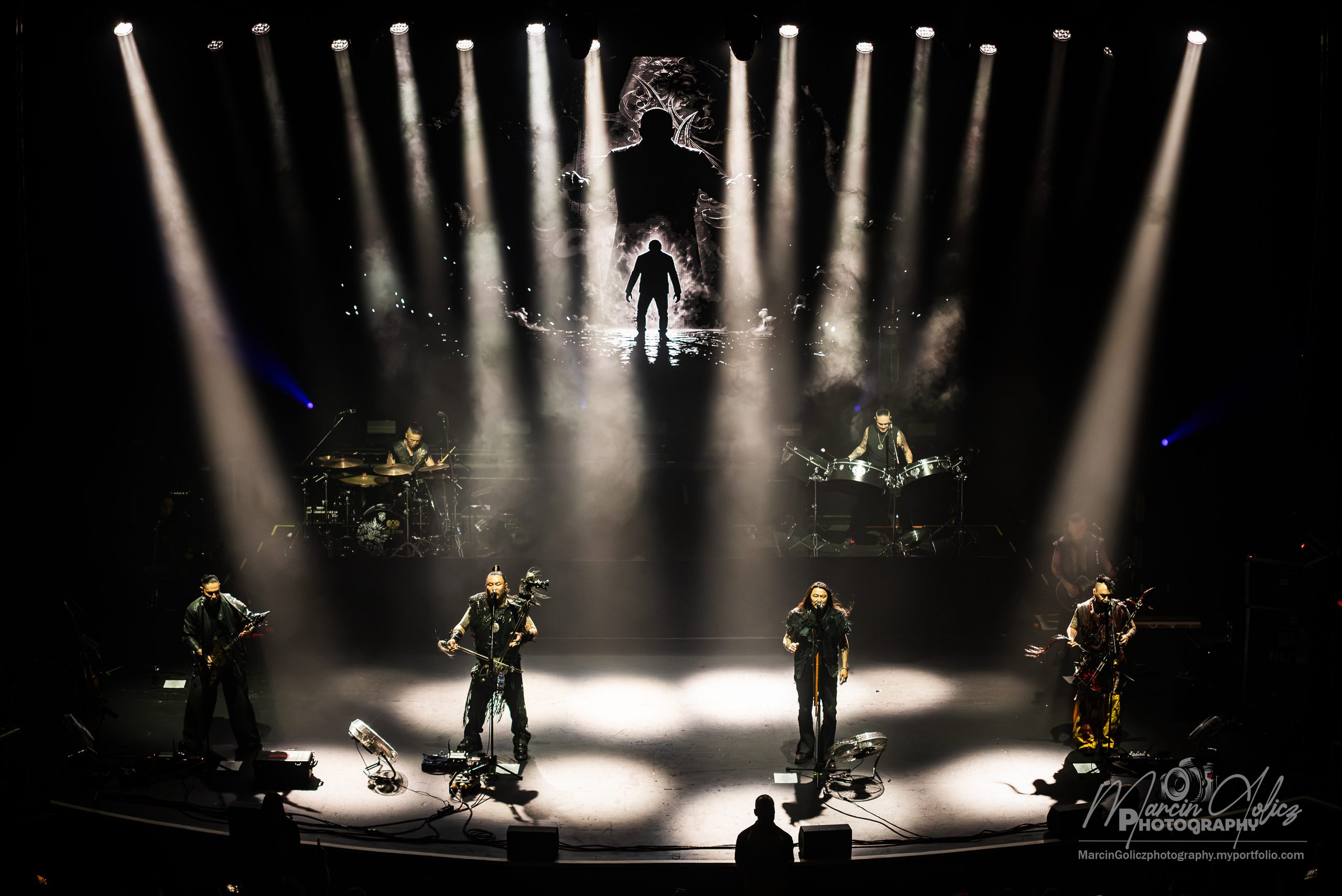
Eight musicians took their places on stage, and four of them are the main members. Galbadrakh “Gala” Tsendbaatar plays the morin khuur and performs the throat singing. Enkhsaikhan “Enkush” Batjargal plays the same instrument and sings. Nyamjantsan “Jaya” Galsanjamts plays the traditional wind instruments and the jaw harp, and Temuulen “Temka” Naranbaatar plays the tovshuur, a traditional Mongolian string instrument. The tsuur, which Jaya also plays, is a Mongolian flute.
The other four musicians are touring members. Jambaldorj “Jamba” Ayush plays guitar and sings backing vocals, and Nyamdavaa “Davaa” Byambaa plays the bass guitar and also sings backing vocals. Odbayar “Odko” Gantumur plays the drum kit, and Unumunkh “Ono” Maralkhuu plays percussion.
‘Lost Soul’, a single from 2026, opened the set, and ‘Horsemen’ followed. Electric guitars and a standard rhythm section stood on one side, and two morin khuur stood on the other. The morin khuur produced a rough, haunting tone that sometimes resembled a distorted electric guitar. Gala has said that playing the morin khuur in a Mongolian home brings good spirits and purifies the house.
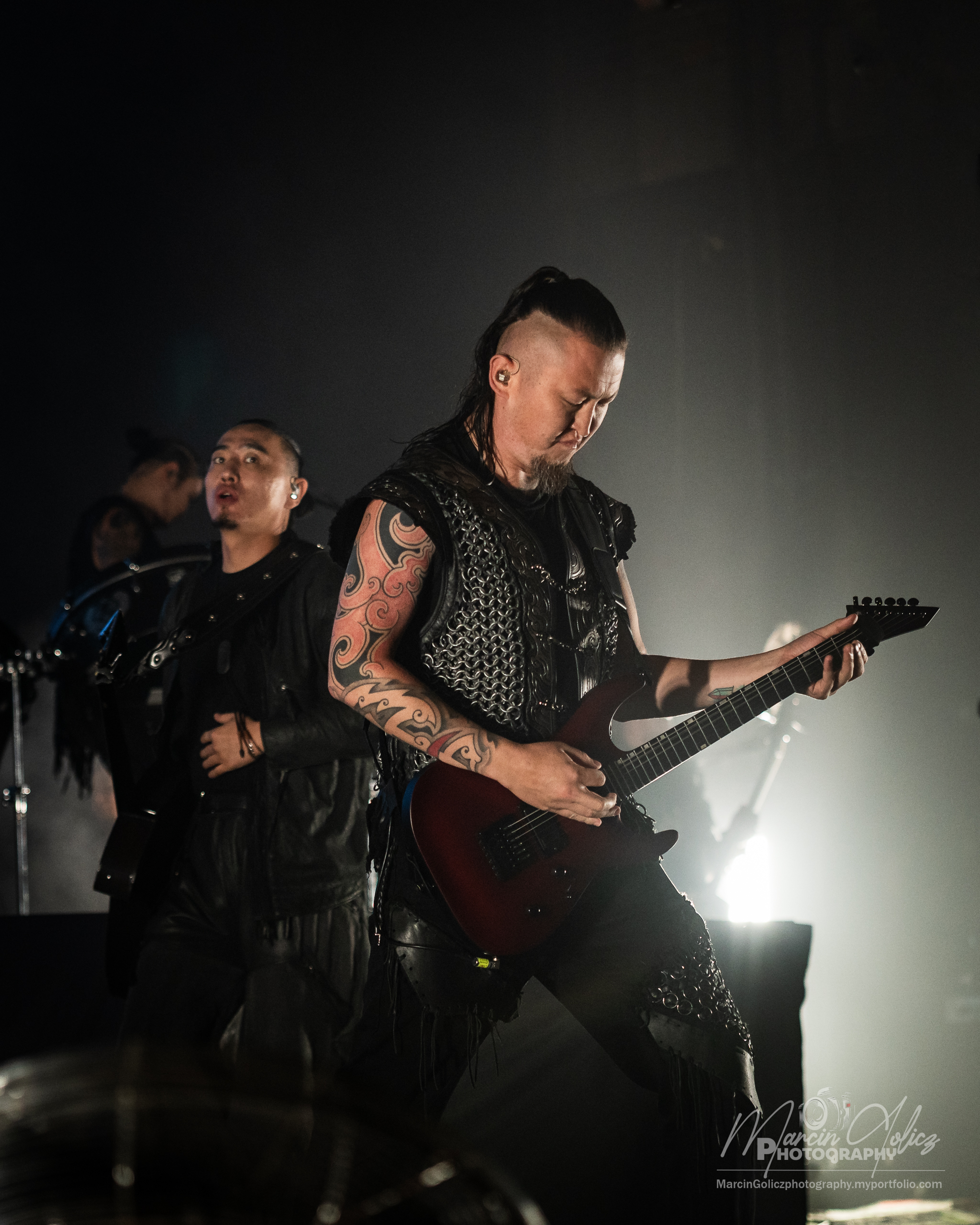
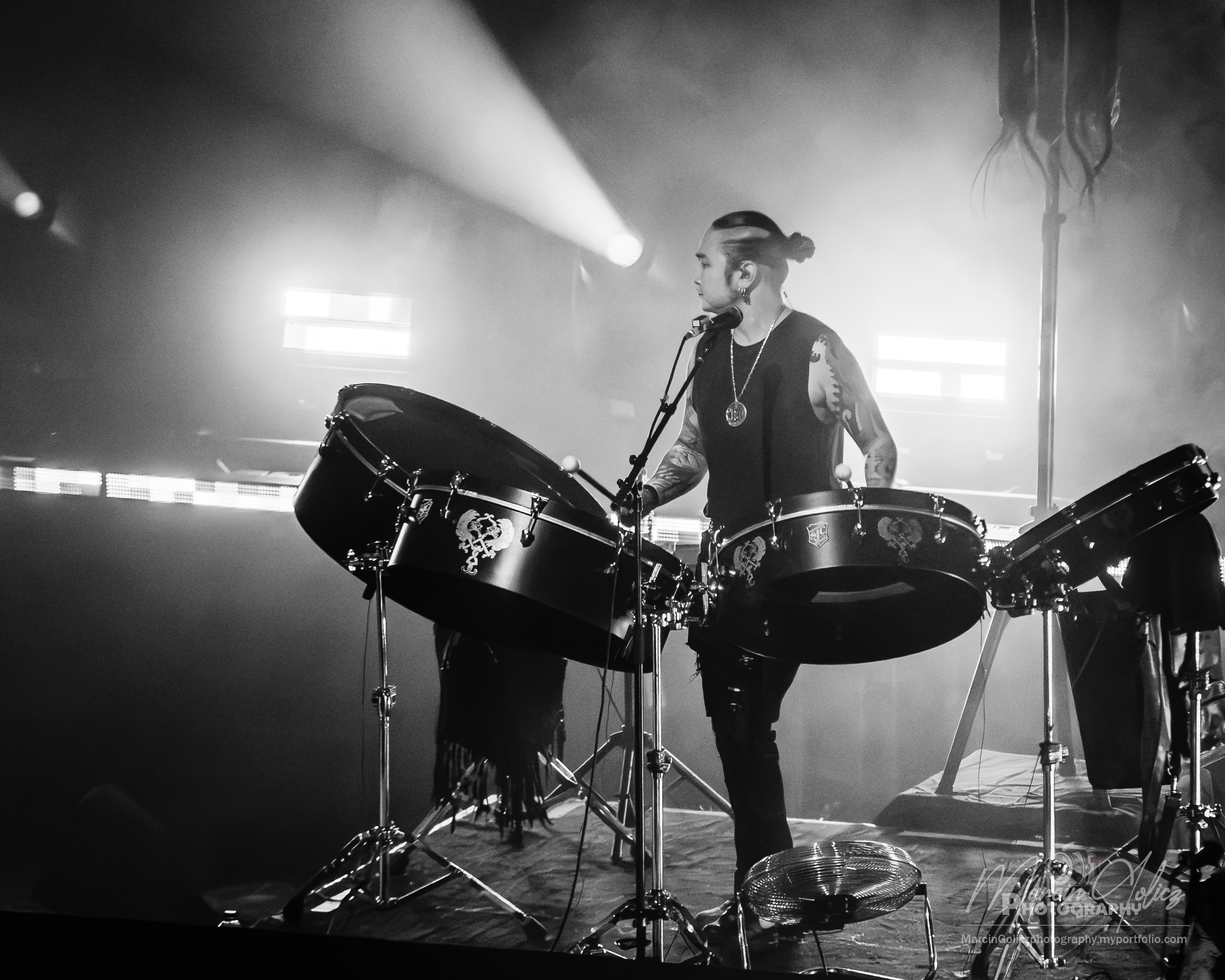
The rhythm section had two parts. Odko played the standard drum kit, and Ono added traditional Mongolian percussion. Together they supplied a strong and steady beat under the guitars and the strings.
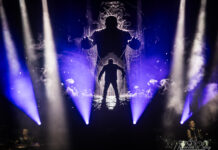
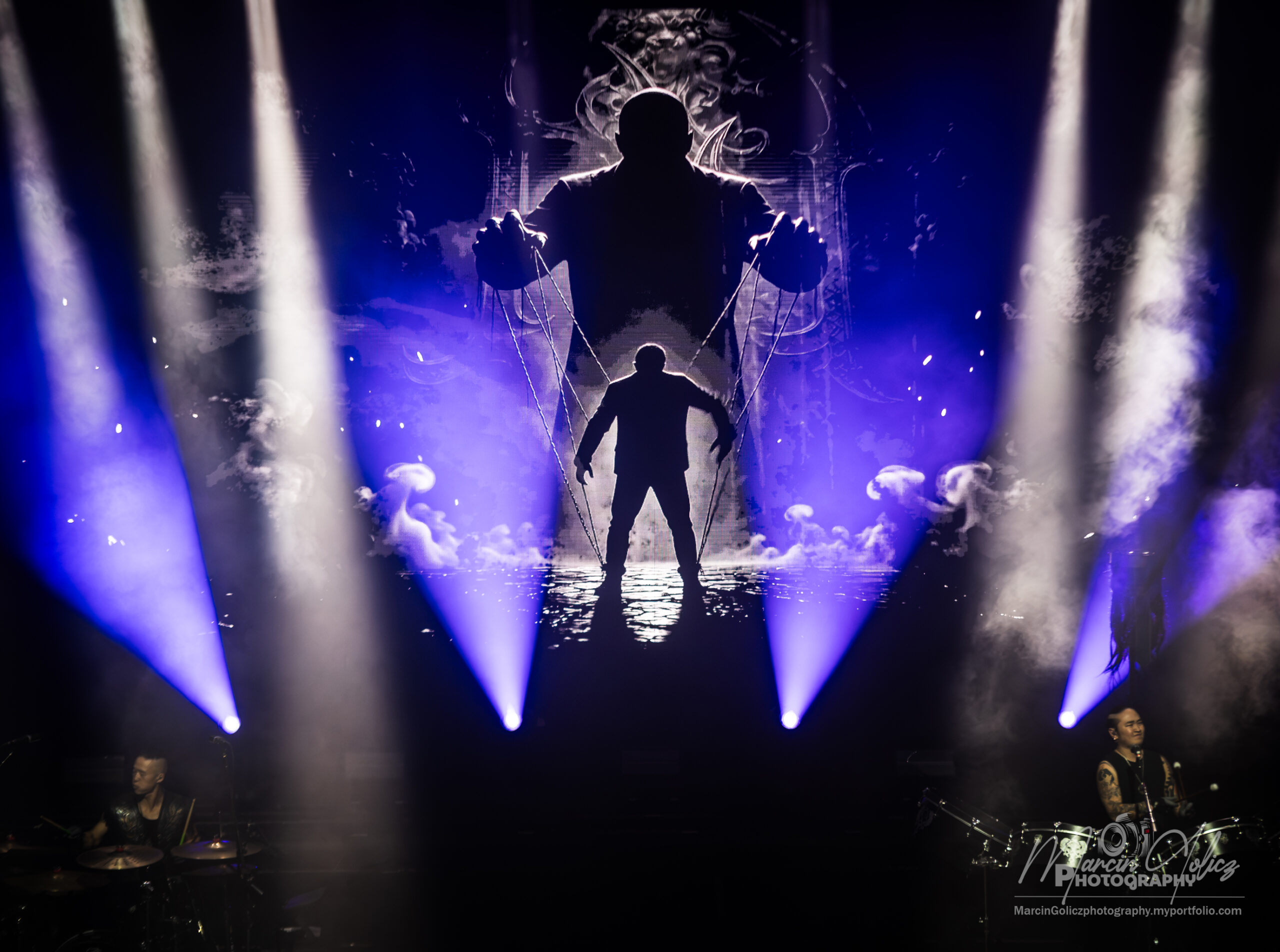
‘The Same’ and ‘Upright Destined Mongol’ came next. The second song was a single from 2024. Both moved between slower passages and heavier sections built on guitar riffs. The lighting changed often. At times the musicians stood almost in silhouette, and then the whole stage was lit at once. Large video projections and smoke were used as well. The show used no pyrotechnics, since the lighting and the video effects gave enough visual impact.
‘The Men’ and ‘Shadow’ were followed by ‘Warrior Chant’, and the audience became more involved during this part of the set. Many people raised their arms and danced in unusual ways, and a mosh pit formed. At times the crowd chanted “Hu! Hu! Hu!”, which sounded strange but entertaining.
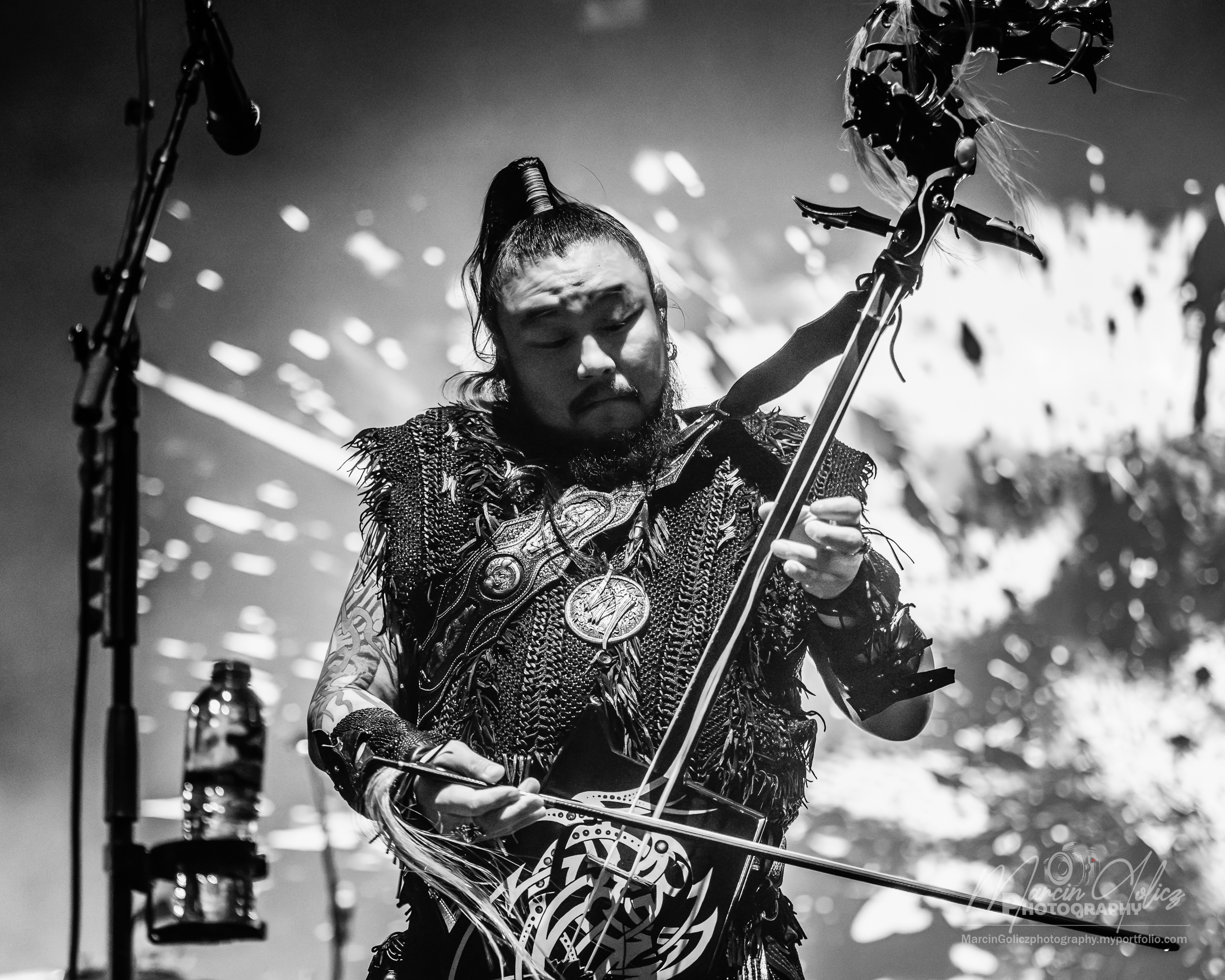
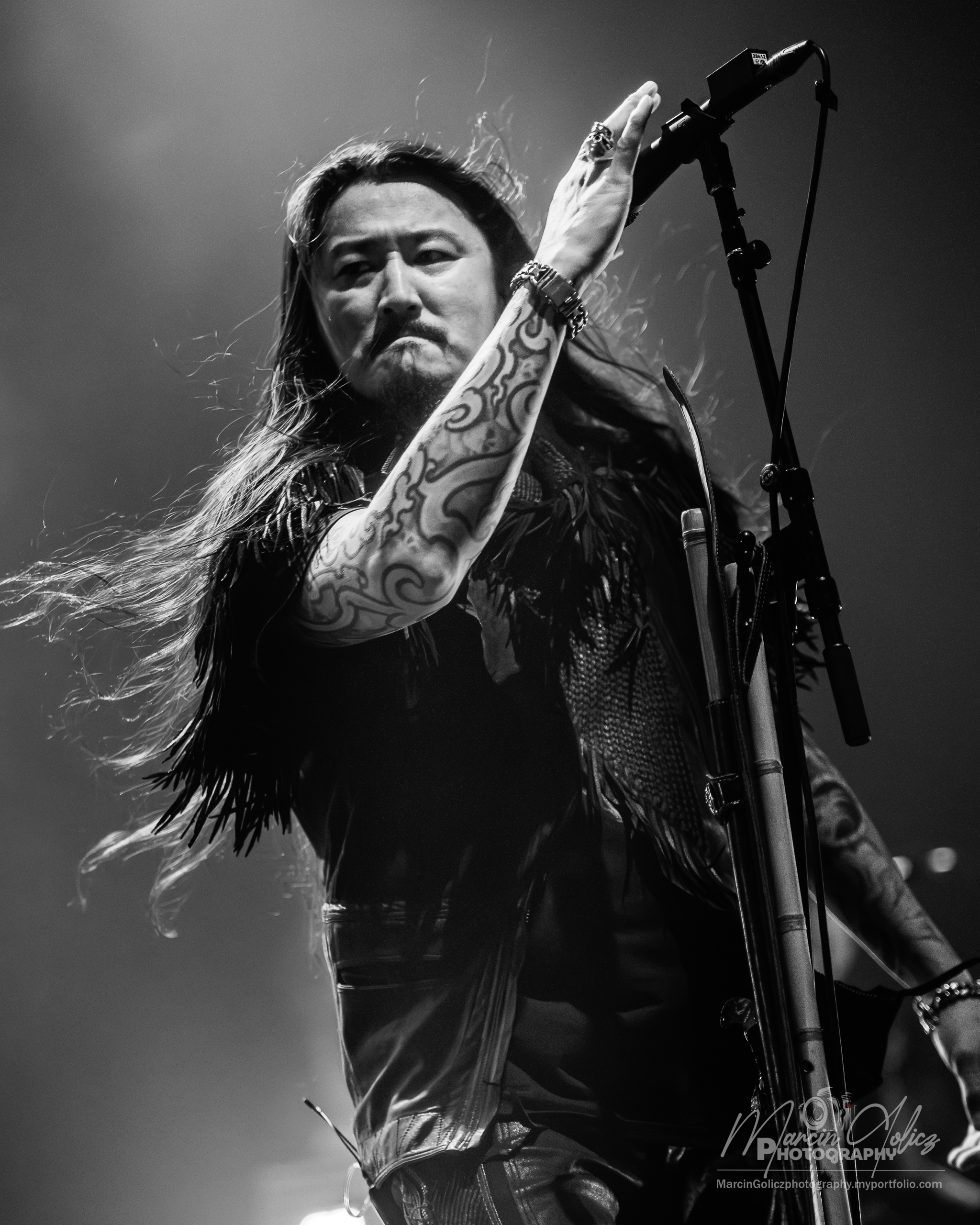
The music of The HU is hard to classify. Many people link the band to metal, but I would call the sound heavy folk music, with occasional fast riffs and strong grooves and with many traditional elements. The deep throat singing supplied most of the power.
Jaya played the jaw harp, which is called the tumur khuur in Mongolia. The player holds this small metal instrument against the mouth and plucks it, and it produces a vibrating sound. It looked simple, yet it gave the music a distinct texture. In the touring line-up, Ono also plays the tumur khuur.
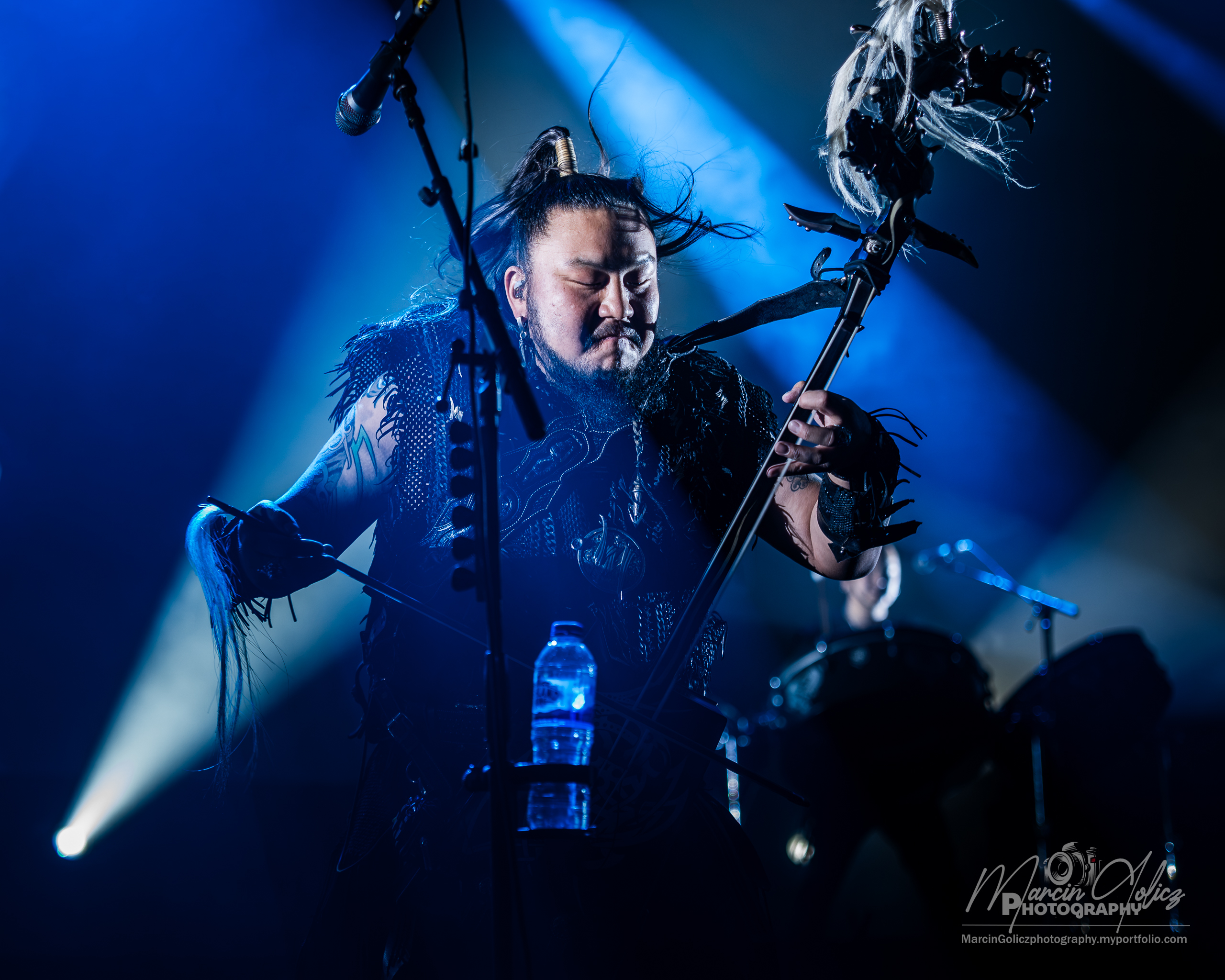
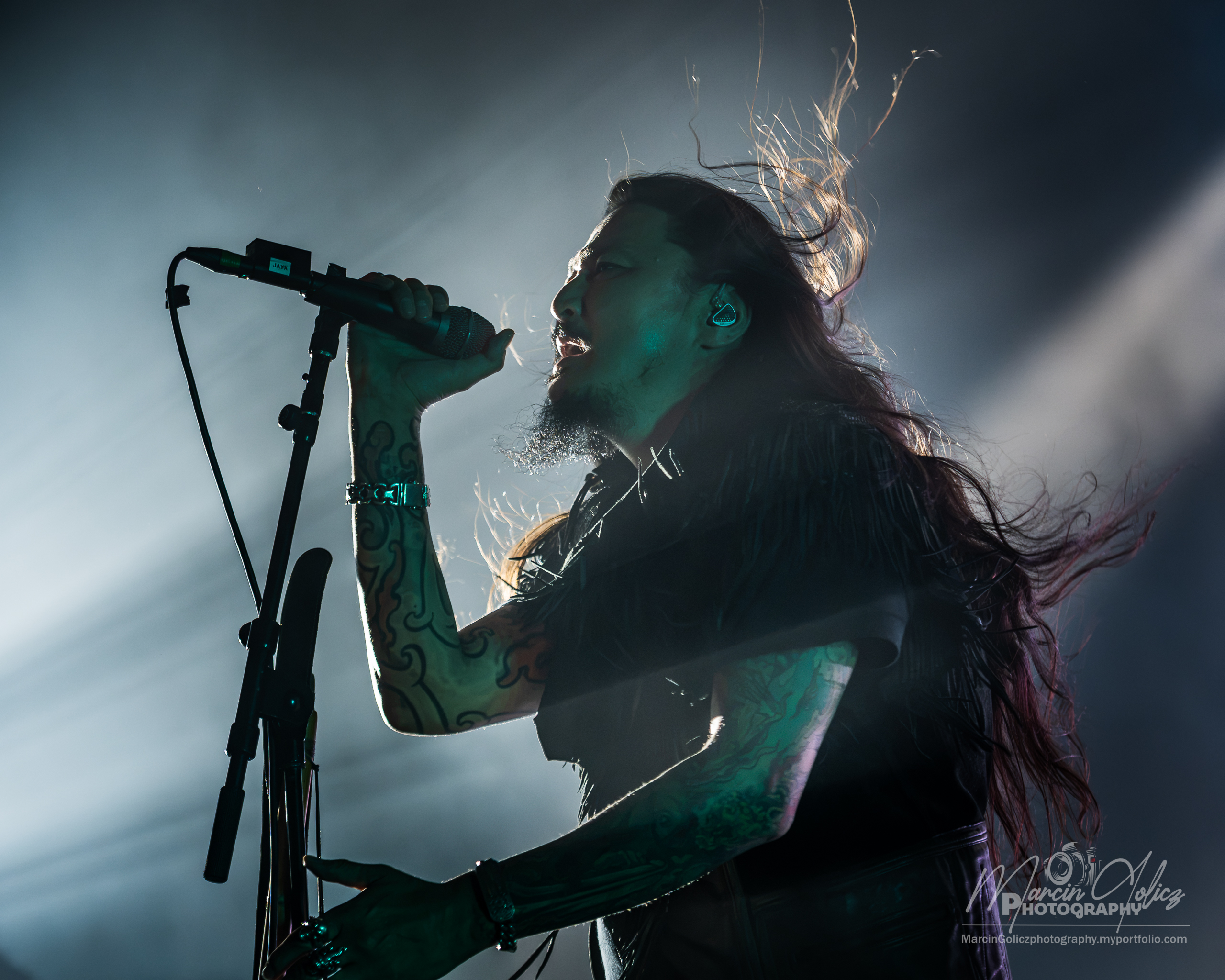
‘Echoes of My Father’ brought a more reflective moment. ‘Grey Hun’ and ‘The Real You’ then returned to stronger rhythms and heavier guitar work. The electric guitar took a solo at one point, and at other points Gala or Enkush played the lead part on the morin khuur. The group vocals, sung by several members at once, resembled a traditional Mongolian chant. The timing among the eight musicians remained precise, even in the complex arrangements.
By ‘Black Thunder’ the audience was fully involved. The driving rhythm and the heavy sound suited the venue. ‘Yuve Yuve Yu’ followed. It is one of the songs that brought the band international attention, and it was one of the most recognisable moments of the evening.
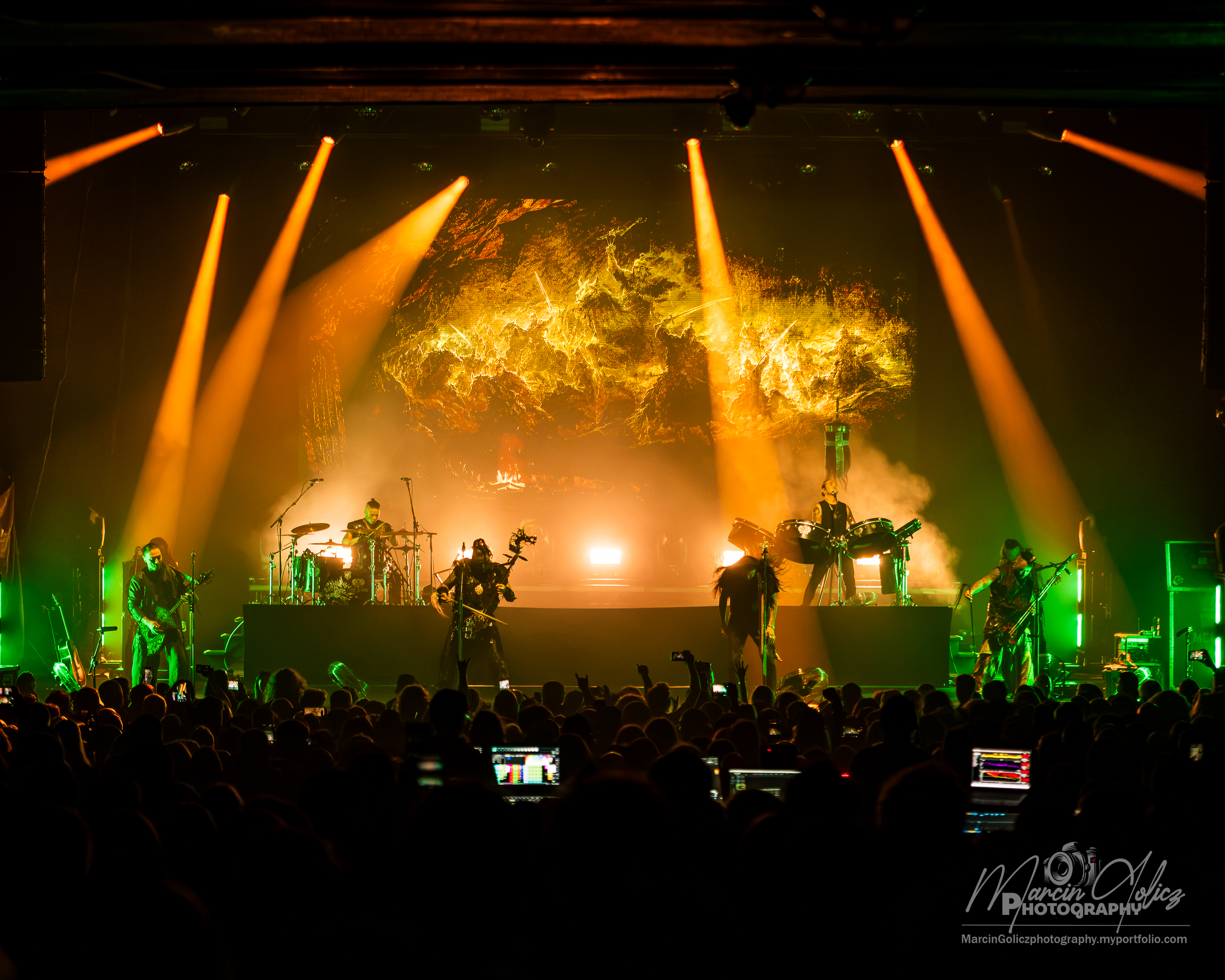
‘Wolf Totem’ drew an even stronger reaction. The song joins throat singing with a heavy groove and traditional instruments, and its rhythm made it difficult to stand still. Some people headbanged, others danced, and the pit became active again. ‘This Is Mongol’ kept the intensity high near the end of the main set. The band looked comfortable on stage.
The encore was ‘The Trooper’, the Iron Maiden song. The HU recorded a Mongolian version of it in 2024, in the period when the band toured with Iron Maiden. The familiar melodies sounded different on traditional instruments.
The language was a limitation. Both bands sang mostly in languages that I do not understand, so I could not follow the meaning of the individual songs, and I would have liked to learn more about the stories. The audience seemed unaffected, since they responded to rhythm and melody.
In summary, SKÁLD delivered a dark and atmospheric opening set, and The HU followed with a loud, energetic show built on unusual instruments and strong vocals. Knowledge of Mongolian or Old Norse was unnecessary to enjoy either set. The concert combined elements of metal and folk, and Manchester appeared to enjoy it from the first drum to the last chorus.
A Mongolian band and a French folk group shared one stage, and an Iron Maiden cover closed the evening. The combination worked.