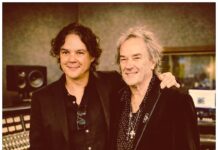
Bob Harris’s decision to step down from the microphone, after 56 years at the BBC, on the grounds of ill health, sees the departure of someone who can truthfully be described as a legendary radio figure, one of the last of the truly great DJs. Someone whose deep knowledge of, care for and love of the music transcended everything else about being in the media. With his low voice and laconic drawl, Bob was perfect for late night radio, and his shows were always worth a listen.
Being a DJ is not just about playing music. Just listen to Radio One, anybody can play music, it’s not that difficult. But to be good at it is very different. Being good means communicating with the audience and the ability to connect with the people who’re listening to what you do, and who appreciate why you’re playing the particular piece of music you’re playing. A good DJ can make the listener feel like he’s personally talking to you and playing this particular song because he knows your tastes and you’ll probably like it, whether it was an established act or a new artist nobody had heard of. They play music they know you want to hear, and would be interested in if it was a new artist, and even if what they played wasn’t always to your liking (I’m still bewildered by John Peel’s championing of rap and hip hop), at least you could appreciate why the DJ played it.
They didn’t even need to be effervescent or garrulous, few were as laconic as John Peel, they just had to know what they were talking about and be able to communicate their love of the music. Johnnie Walker, in the mid 1970s, walked away from what was then the most popular daily show on Radio One, the Lunchtime show, because BBC management objected to his playing album tracks from often unknown bands he thought deserved to be heard. They told him to stop, so he quit. He was accused of being “too much into the music”, surely an essential requirement of the DJ’s job description.
These were the essential skills all the great DJs possessed, John Peel, Johnnie Walker, Tommy Vance, Alan Freeman and Bob Harris, which is why they’re still as revered as they are. Sadly, Bob is now the last man standing.
A good DJ can also be influential. John Peel’s late night radio show, The Perfumed Garden, was essential listening in the late 60s as he introduced US acts like Capt Beefheart, Zappa, Buffalo Springfield and Love to UK listeners when Radio One didn’t play them. Bob Harris did the same on television through the early to mid seventies, when The Old Grey Whistle Test was required viewing, featuring acts in the studio you’d only read about in the music press, such as Little Feat and Steely Dan, and they’d be playing live, unlike the acts who mimed on Top of the Pops. Their views can also be contentious when they take a stand. Johnnie Walker’s live on air dismissal of the Bay City Rollers as “garbage” was very controversial, and John Peel’s description of Emerson Lake and Palmer as “just a waste of electricity” stimulated quite a debate about musical merit. But their fans stayed with them for this.
The rapport a good DJ can establish with an audience also helps make an event something special. Throughout the seventies I attended a number of Reading festivals, and part of my memories of these events includes not just the bands but the DJs between acts. John Peel was a regular, and his jokey chant of “John Peel is a c**t” (he even wore a shirt with the slogan printed across it) was frequently heard between sets, often with Peel conducting the singing and having it repeated if it wasn’t shouted out with sufficient gusto. Only he could’ve got the audience to sing along with ‘Nellie the Elephant’ while waiting for the next act.
Anyone can play music on the radio, but to take the listener with them down the years is a skill possessed by few. Everyone knew people like Noel Edmonds, Zoe Ball and Chris Evans were just doing a job when they hosted radio shows, Edmonds even admitting he never listened to music outside the studio. But the good DJ loved the music as much as any fan did, and was able to communicate this to the listener. When Radio One’s on, it’s usually just the background noise to whatever you’re currently doing, but listening to Harris, Peel, Walker and the rest was the whole point of having the radio on. They made what they were playing the whole reason you listened.
I wasn’t lucky enough to meet any of these DJs (though John Peel passed by me at Reading one time), but when Peel and Johnnie Walker died, I felt like I’d lost good friends, not just DJs I’d listened to for many years. They weren’t just voices on the radio, they were a listening experience in their own right, which they made hugely enjoyable with their love and enthusiasm for the music.
There’re probably still great DJs out there now, maybe on stations I’m unfamiliar with, and while it’s sad Bob Harris is stepping down, I’m just happy I grew up listening to such radio legends. I doubt we’ll see their like ever again. Thanks for all the music and the memories, chaps.