

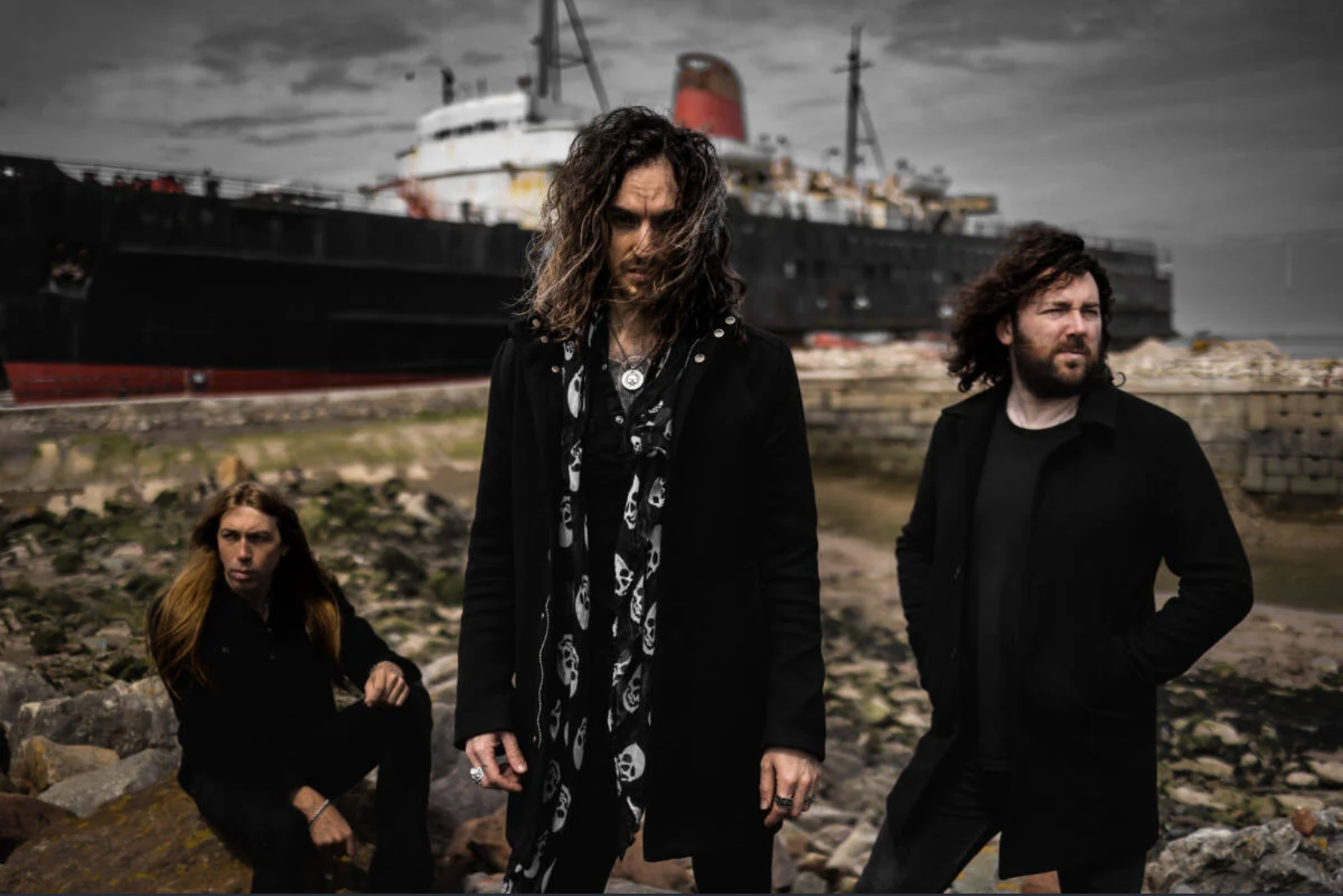
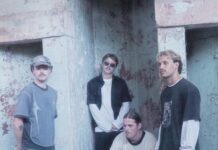
If you missed out on catching The Dead Collective live earlier this year when they toured, then grab yourselves a copy of their new EP.
Vocalist/guitarist Oli Brown was initially recognised as a blues musician, winning several awards as Best Guitarist, Best Band, Best Singer at the British Blues Awards. Through his solo career he toured and supported artists such as Jeff Beck, Joe Satriani, John Mayall and Buddy Guy.
Craving a change in musical direction and a departure from his roots, Brown formed the rock band RavenEye. Starting out with a five-track EP, they caught the attention of Slash, who proceeded to bring the band on tour through Europe and the USA. That band went on to release their debut album Nova and took their live headline show across the USA, UK, Europe and South America. A European tour with Kiss helped cement the band’s footprint in Europe, along with tours with Aerosmith, The Darkness, Halestorm, Blues Pills and major UK, US and European festivals.
However, when the pandemic struck, Brown used the time during the worldwide lockdown to reconnect with his own songwriting and lyrics. He formed The Dead Collective with drummer Wayne Proctor (King King) and guitarist Sam Wood (Black Star Riders). Their new EP is 23 minutes long, distilling the band’s evocative, atmospheric and sharp soundscape.
A single searing guitar is joined by a second heavier-toned partner, giving way to gentler strummed chords on The Dead Collective EP’s opening number and first single ‘Cracks’. The sound is dreamy, a little fragmented, but taking a melancholic turn as Brown’s despairing lyrics begin to pour out, intensifying and subsiding by turn until reaching its climax, whether that be cathartic or one of utter despair dependent on the listener’s own frame of mind perhaps. It’s followed by second single ‘Goliath’, where we’re offered Eastern-flavoured guitars across soundscapes that slowly bend towards more thumping yet hypnotic textures. It’s not a million miles away from the silk roads Robert Plant took us down, but filled with a lot more rage in parts vocally, and as Brown explains: “‘Goliath’ is about being trapped and overwhelmed by unsurmountable pressure to maintain expectations and relevance. The potential to either collapse or dive into transformation to be renewed.”
‘Estranged’ might be considered the other side of the lyrical chain to ‘Cracks’, something heartbreaking when Brown sings out “Can I stay?”. While continuing the atmospheric vibes fans have come to expect from The Dead Collective, the application of keyboards here alongside rhythms more akin to trip hop take this beyond the confines of rock music, and that’s probably my main concern about this band: I fear they might be perceived as being pigeonholed into past musical allegiances when there’s a wider and younger listening audience out there likely to respond positively to what’s being offered, emotionally and soundwise. Finishing with ‘Falling’, a number that takes the previous one a couple of steps further musically: keyboards appropriate epic orchestral arrangements, there are choir-styled harmonies, then a turnabout almighty noise rock ending that says: Take that!
Like early Radiohead fronted by Jeff Buckley, but so much more potentially for this listener. The Dead Collective EP is intense, shimmering, emotional, brave, and inspiring, as they are when they appear live.
You can stream ‘Goliath’ now, along with previous single ‘Cracks’. The Dead Collective EP can be found on all streaming platforms as well as on CD and vinyl.








I feel excited when Sprunki blends rhythm, characters, and sound layers, creating an inviting space where beginners and music lovers can explore styles and creativity.
The description of “Cracks” makes the arrangement easy to imagine: one searing guitar, a heavier-toned partner, then gentler strummed chords beneath lyrics that intensify and subside. That contrast seems more important than sheer volume, because each layer changes how the next one is heard. It is the same listening habit I encourage while maintaining the independent Japanese Sprunki JP guide: add one sound role at a time, notice whether it creates space or masks another part, and remove it if the mix loses shape. A 23-minute EP can feel substantial when the sequencing is deliberate, and this review explains that dynamic arc more clearly than a simple track-by-track list would.
I’m especially intrigued by how the EP seems to move beyond conventional rock without losing its intensity. The contrast between the melancholy of “Cracks”, the hypnotic weight of “Goliath” and the orchestral chaos of “Falling” sounds genuinely compelling. The Radiohead-meets-Jeff-Buckley comparison certainly makes this feel worth a listen.
The review’s track-by-track progression is especially useful: the fragmented melancholy of Cracks, the heavier Eastern-flavoured guitars on Goliath, the trip-hop-adjacent keyboards in Estranged, and the choir-to-noise-rock turn in Falling make the 23-minute running time feel like a deliberate arc rather than a collection of similar songs. The comparison to early Radiohead with Jeff Buckley also explains the emotional register more clearly than a genre label alone. I help maintain SoritiaGo, an independent Japanese solitaire site, and the same idea of explaining structure before labels guides our three-card Klondike page: readers need to understand how a sequence changes their options. Different subject, but the editorial principle is comparable. Your warning that the band could be pigeonholed by its past blues and rock associations is a sharp conclusion.