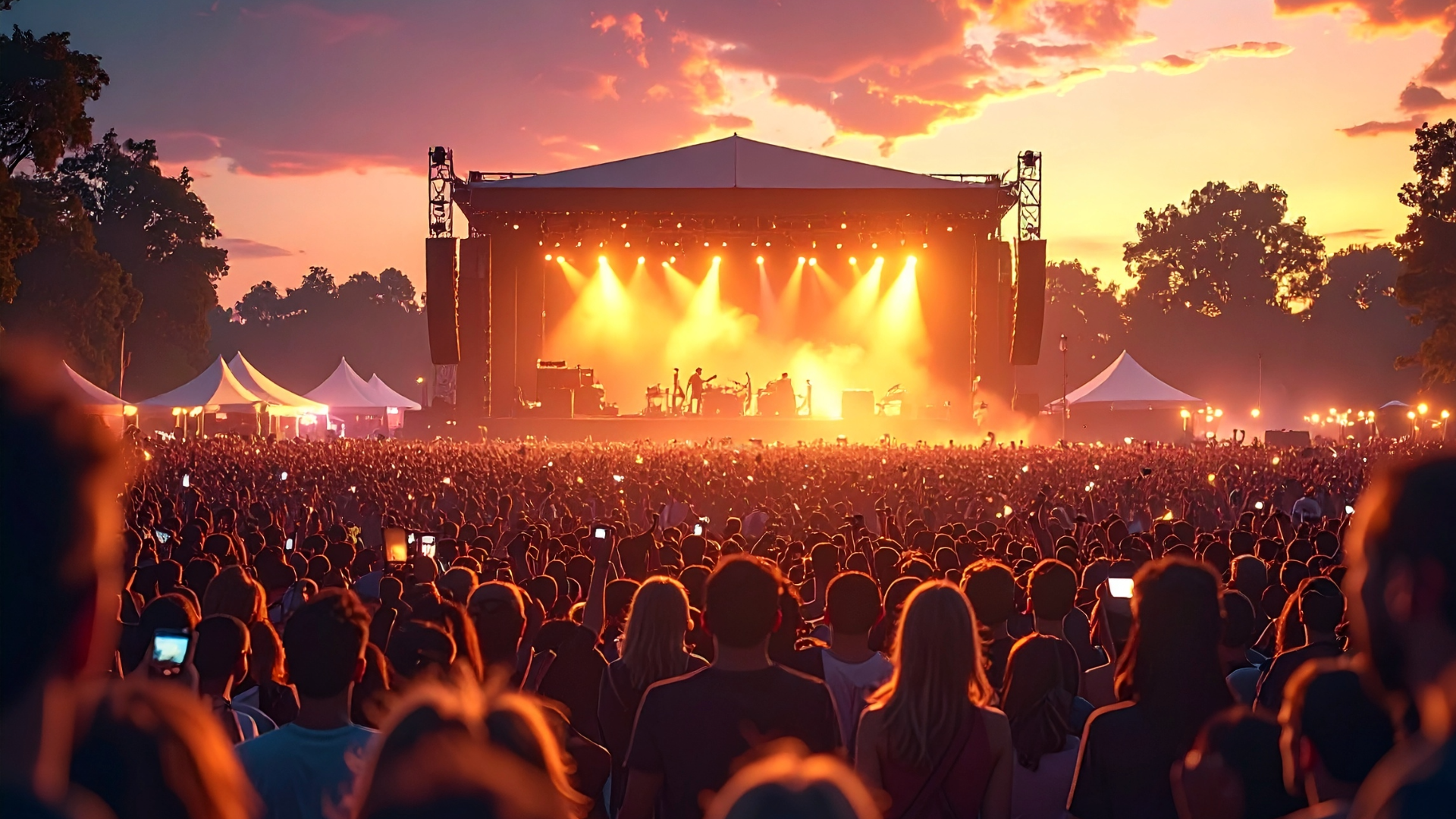
It wasn’t so long ago that you could go to a festival with almost no way to contact the outside world. There was no internet, and smartphones weren’t a thing. People simply enjoyed the experience.
Now it’s completely different, with attendees and organisers uploading clips and livestreams online. This could be paving the way for major festivals to become hybrid events, where the action in the fields is made available on online entertainment platforms.
Festivals May Need to Adapt to the Age of Digital Platforms
Even with all the changes in the way we experience entertainment, festivals have endured and stayed popular. There are questions around how long that can continue in the traditional format, though, as the pull of digital entertainment platforms grows stronger.
For nearly every form of online entertainment, people are used to interacting with sprawling platforms. In music, for instance, everything is now on Spotify or Apple Music, with people easily able to switch between different artists or albums in seconds. The same thing is true for film and television, with streaming services providing thousands of options. Even the online bingo industry has its own platforms, with everything from bingo rooms to bingo slots online. There are even live bingo options powered by live streaming, something that may also be adopted by festivals, as we will discuss.
With festivals only happening as annual one-offs, it may not make sense for each one to build its own platform where viewers can watch every act. But there could be a gap in the market for a specialised festival platform pulling together content from a wide range of events around the world, arranged like a streaming service, with users clicking through thumbnails to drop into different stages.
Live Streaming Is Already Becoming a Key Feature of Festivals
A few things make this plausible, and the rise of high-quality live streaming helps most of all. Many major festivals already stream performances in real time on platforms like YouTube. Coachella is a strong example, with its 2026 coverage streaming across seven stages.
The appeal is obvious: it expands a festival’s reach and turns it into a global online event. Plenty of people watching from home would never be able to travel to California, afford a ticket, or take the time off work. By opening up access online, Coachella becomes something closer to an event for everyone.
It would make sense for other festivals to follow suit, because it makes them far more inclusive. There’s no denying tickets for the biggest events have become a lot more expensive than they once were, so an online platform carrying live streams could act as a cheaper alternative.
With online platforms now the main way we connect with every other form of entertainment, hybrid festivals built around subscription access could be the logical next step, a single place to experience them all. The technology is here, and it would open these events up to a much larger audience.