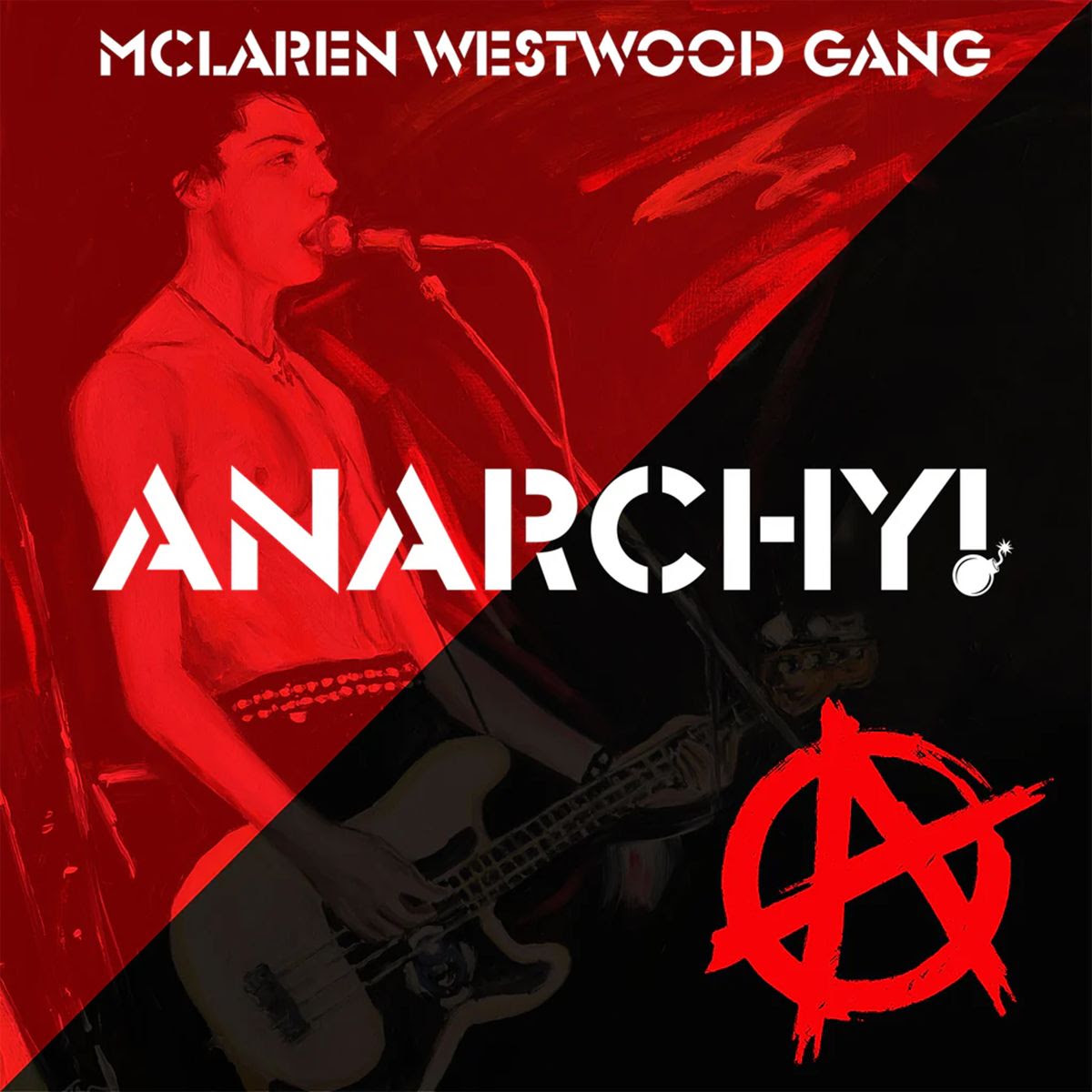
Originally released in 2013, Anarchy is now being re-released to coincide with the 50th anniversary of ‘Year Zero,’ as well as the ‘Festival of Punk,’ held at the 100 Club, 1976, one of the first occasions the wider unsuspecting public knew something was bubbling beneath the surface. Malcolm McLaren was ‘there’ and he played a pivotal role in the whole onset of Punk, but did so from the perspective of fashion rather than through music. McLaren had zero interest in music, fashion being his ‘thing,’ and the Sex Pistols were simply a vehicle for selling the clothing… bondage strides, torn T-shirts and rubber gear… he and his muse, Vivienne Westwood, created and designed, and whilst Punk may well have had a short shelf life, he played a significant part in creating a ‘Punk/fashion’ shockwave which, says Boy George, even now is still reverberating.
McLaren is the dominating part of the film, but Anarchy takes a holistic view of the whole era, touching on the pre-Punk social and political context, and looking at the people, the fashions and, ultimately, some of the controversies and impact of what became one of the biggest cultural explosions of the twentieth century, and Phil Strongman is well qualified to make this film… he was right in there on the ground floor, helping to fight the Punk wars, working on the King’s Road when McLaren and Westwood had their shop, and attending the gigs and being present at several of Punk’s more controversial moments, as well as being the author of Pretty Vacant: A History of UK Punk.
McLaren studied art & design before launching his fashion ideas. He spent time in the US in the early seventies, wanting to be the ‘British Andy Warhol,’ and got involved with the New York Dolls, where his ideas of red patent leather stage gear with a Hammer and Sickle backdrop went down badly, with guitarist Johnny Thunders blaming McLaren for the band splitting. Back in London, from a shop named ‘Sex’ on the King’s Road, he puts his ideas of ‘image, performance and music all wrapped up together’ into practice… the Pistols were the result and a social revolution emerged. McLaren was fortunate to be in the right place at the right time as a generation of bored teenagers was looking for something different, and the Punk message of No Fun, No Future resounded loudly.
The film contains a wealth of older footage of places and gigs, but surprisingly no footage of the Pistols in action which would have given the film added gravitas, as well as perceptive comments and interviews with luminaries who were there, including Tony Wilson, Boy George and Adam Ant, plus detailed contributions from Ben Westwood, McLaren and Westwood’s son.
Ultimately, whether you’ll enjoy this film will depend on your view of Malcolm McLaren… interest declared, mine is not favourable… but, to be fair to him, there can be little doubt about the role he played in a major social movement. Anarchy is a film for anyone who wasn’t around at the time as a social history of the seventies and, if you can stomach some of McLaren’s more ludicrous pronouncements and outlandish claims… his eulogising of the pathetic specimen which was Sid Vicious is laughable… it’s a fascinating period piece.