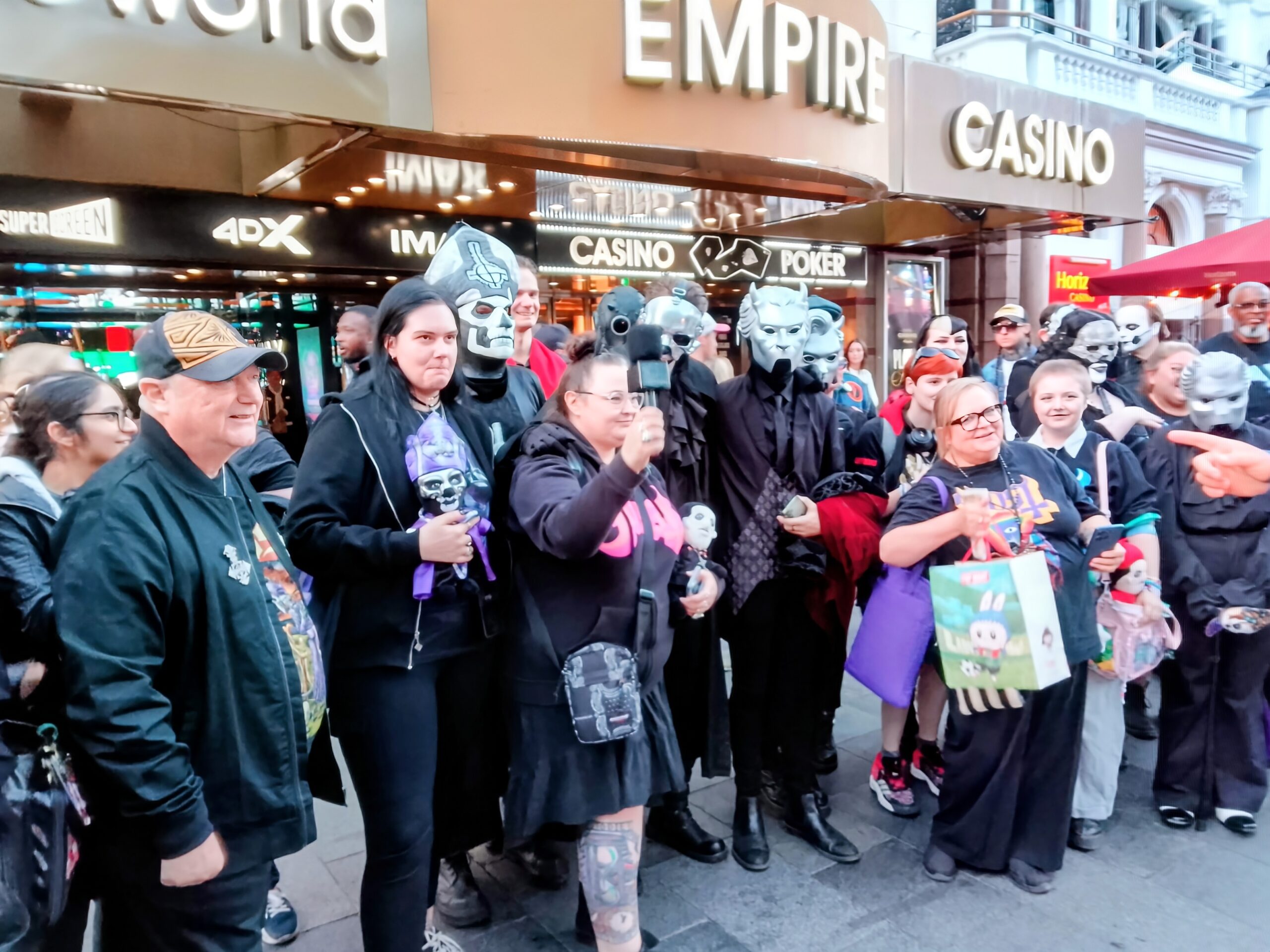
Film review: 2 Big to Rig. Cineworld IMAX, Leicester Square, London, August 2026.
Swedish symphonic-doom metal rockers Ghost formed in Linköping in 2006. The band released their debut album, Opus Eponymous, in 2010, earning them immediate international recognition.
In early incarnations, lead singer Tobias Forge performed under the persona of ‘Papa Emeritus’, surrounded by his anonymous bandmates, the ‘Nameless Ghouls‘. Since then, fans have witnessed five incarnations of Papa, a chapter where Tobias revealed his ‘humankind’ unholy self in the guise of Cardinal Copia, and a public falling-out between Papa and his Ghouls.
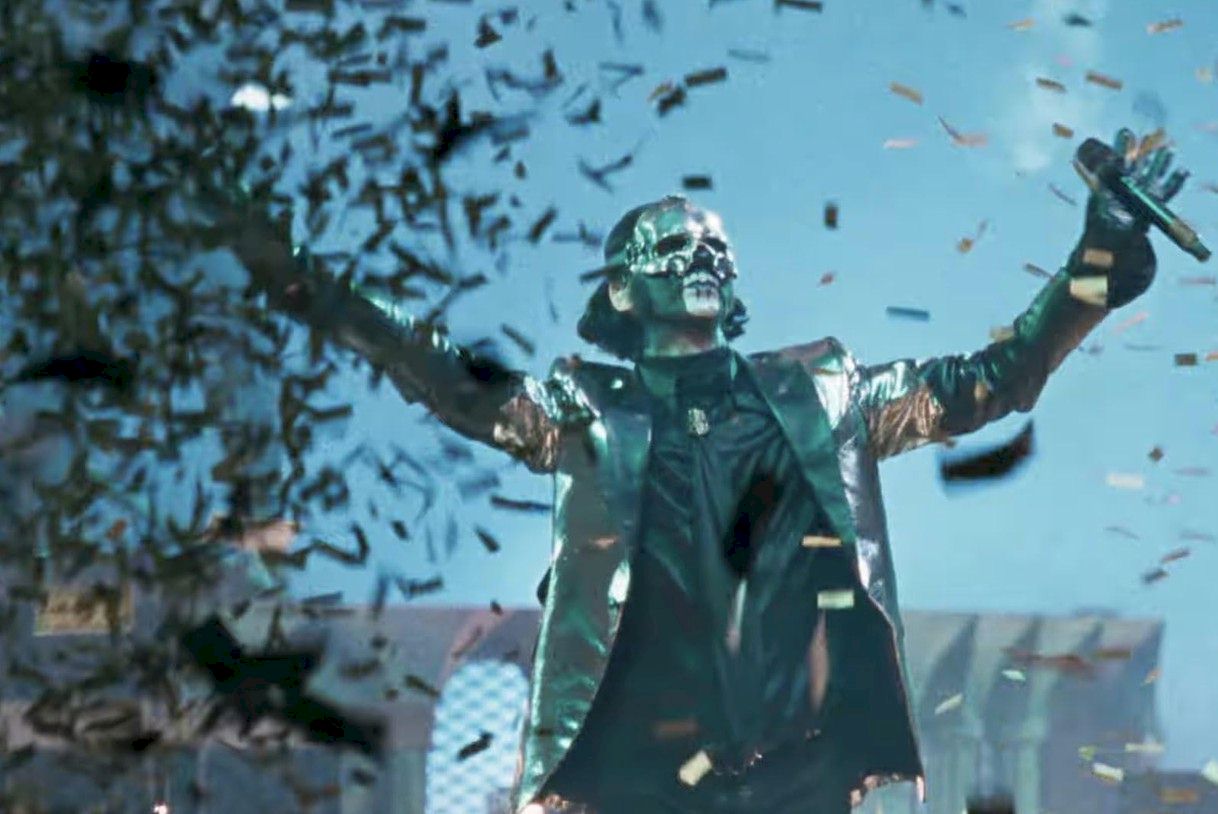
Captured live over the course of Ghost‘s two sold-out shows in Mexico City, 2 Big to Rig is described as the definitive film document of the band’s no-phones-allowed tour. Featuring the only pro-shot footage of Papa V Perpetua and his band, the film immerses the audience in the full Ghost ritual while offering exclusive behind-the-scenes and backstage access.
The core concept of 2 Big to Rig revolves around the scale of the production: a stadium show so humongously, outrageously, and fabulously gargantuan that it could not easily be transported to smaller venues. The production employed 106 full-time crew members alongside 150 local workers, took a full year to plan, and packed over 64 tons of equipment. As a result, the film allows fans to experience the sheer scale of the performance from the comfort of grade-A cinema seating.
Even so, British aficionados turned out in their thousands when the tour hit Manchester, Glasgow, Birmingham, and London. Still, nothing quite compares to Ghost‘s performances at the 26,000-capacity Palacio de los Deportes in Mexico City.
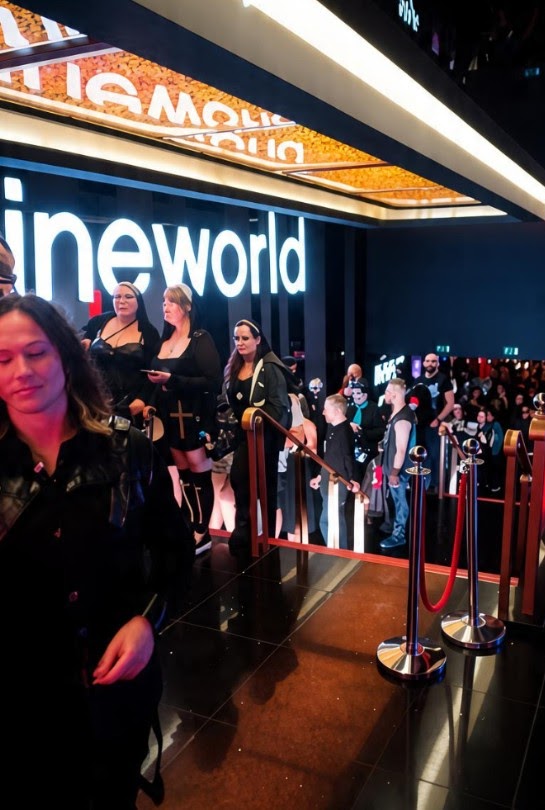
We attended the world premiere at the IMAX theatre in Cineworld, Leicester Square, London, which boasts an 87-foot screen powered by dual 4K projectors. Our sneak-preview screening, shared with a passionate crowd of Ghost fans, was also shown across five cities simultaneously.
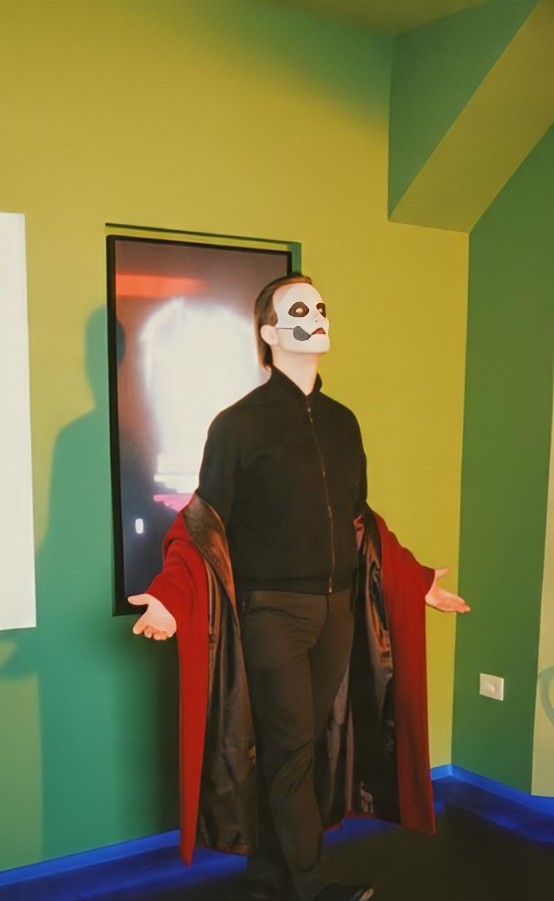
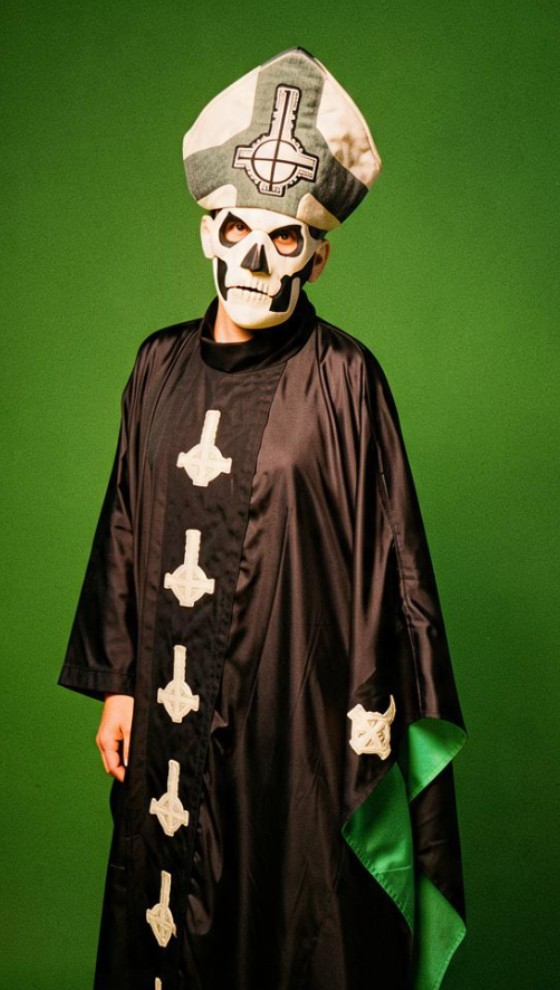
Directed by Tobias alongside Swedish director and rapper Amir Chamdin, the film opens with a grey, grainy visual texture. Was this a stylistic nod to day one, when Tobias suffered a severe case of food poisoning that he later dubbed Montezuma’s revenge? Intentional or not, the graininess creates an effective visual allegory: a show stalled, then reignited. By contrast, the footage from the second, longer day is significantly brighter, sharper, and fuller.
On stage, the guitar Ghouls donned top hats, while the bass and key Ghouls wore ‘nunnish’ Pharaohic head-cloths. The drum kit sat atop a gigantic wedding-cake structure, while the keyboards rested on a hellish baptismal font. The set design oscillated between the religious and the anti-religious before building to a gloriously histrionic climax, choreographed to within an inch of perfection. It was pure carnivalesque theatre, which the Mexican audience embraced wholeheartedly for their perpetual Día de los Muertos celebrations.
Beginning with ‘Peacefield’ and ‘Lachryma’, the setlist rolled through fan favourites like ‘Rats’, ‘Mummy Dust’, and ‘Monstrance Clock’, as well as Evert Taube’s ‘Så länge skutan kan gå’ (‘My father used to sing that one!’). The encore delivered heavy hitters: ‘Mary on a Cross’, ‘Dance Macabre’, and ‘Square Hammer’.
If there is one critique, it is that the film shies away from revealing the true inner workings of the band, save for a few swift guitar exchanges behind the curtain. Then again, how much mystery should be unmasked when dealing with a troupe of brilliant theatrical performers hiding behind cleverly contextualised personas?